

Choosing the right respirator filter is often less about “A2 or P3?” and more about what hazard mix you actually have. Many real jobs involve both airborne particles (dust, fumes, mist) and organic vapours (solvents), which is where combined A2P3 filtration becomes essential.
📋 Key Takeaways
- A2 filters protect against organic vapours (solvent-type gases), they do not stop dusts, mists, or fumes.
- P3 filters protect against particulates (dust, mist, metal fume, smoke), they do not stop solvent vapours.
- You need both (A2P3) when your task can create vapours and particulates at the same time, such as spray painting, solvent cleaning with sanding, or certain resin work.
- Filter choice must be based on a risk assessment (COSHH in the UK) and the specific chemicals involved, not just the job title.
What do A2 and P3 actually mean?
Respirator filters are classified under EN standards (commonly EN 14387 for gas/vapour filters and EN 143 for particulate filters).
A2 (Organic vapour) in plain English
An A-class filter is designed for organic vapours with a boiling point above 65°C, typically solvent-type vapours you might smell.
Common examples:
- Paint thinners and white spirit
- Many adhesives and solvent cleaners
- Some degreasers (depending on formulation)
The “2” indicates capacity class (roughly, how much vapour the carbon can adsorb before breakthrough). A2 is a common “workshop” capacity.
P3 (Particulate) in plain English
A P3 filter is designed for solid and liquid aerosols, including fine particulates.
Common examples:
- Wood dust, MDF dust
- Concrete, plaster, brick dust (including respirable crystalline silica)
- Metal fume (welding, grinding)
- Paint spray mist (overspray droplets)
- Biological aerosols in some settings
The big rule: A2 is for vapours, P3 is for particles
If your hazard is a vapour, you need A (or other gas class like B, E, K).
If your hazard is a particle, you need P.
If your hazard is both, you need a combined filter such as A2P3 (or a multi-gas + P3 filter like ABEK-P3 if required by the substances involved).
Filter Type Comparison
| Filter Type | Protects Against | Typical Job Examples | What it does not protect against |
|---|---|---|---|
| A2 | Organic vapours (solvents) | Solvent degreasing, brush painting with solvents, adhesive use | Dust, mist, metal fume |
| P3 | Particulates (dust, mist, fumes, smoke) | Sanding, cutting, grinding, welding fume, construction dust | Solvent vapours, most gases |
| A2P3 | Organic vapours and particulates | Spray painting, solvent cleaning + abrasion, GRP/resin work, many workshop tasks | Oxygen deficiency, unknown/very high concentrations |
When do you need both A2 and P3?
You typically need A2P3 combined protection when any of the following are true.
1) Spray painting (classic A2P3 scenario)
Spray painting creates:
- Organic vapours from solvents, reducers, and carriers
- Fine paint mist (liquid particulates/aerosols)
Even “low odour” products can produce harmful vapours, and paint mist is a particulate hazard.
2) Sanding or scuffing painted surfaces, especially after solvent use
If you wipe down with solvent and then abrade, you may be exposed to:
- Residual vapours
- Dust from coatings, fillers, and substrates
3) Resin, fibreglass, and composite work (depending on chemistry)
Some resin systems and solvents produce organic vapours, while cutting and finishing produces particulates.
4) Cleaning with solvents in dusty environments
Even if you are not actively sanding, a dusty workshop plus solvent cleaning can mean dual exposure.
5) Tasks that create fumes plus vapours (less common, but possible)
Some processes can generate a mix of particulate fume and vapour-phase contaminants. Your COSHH assessment and SDS will guide the correct filter types.
“Nuisance odour” pads or simple carbon layers on some particulate masks are not the same as an A2 gas filter. If you need organic vapour protection, look for a certified A-class (for example, A1 or A2) or a combined A2P3 filter.
Common situations where you do NOT need A2 (vapour protection)
You likely only need P3 (not A2) if the hazard is purely particulate, for example:
- Cutting, drilling, sanding wood, plaster, concrete
- Most welding fume situations (often particulate-dominant)
- Sweeping dusty areas (though consider extraction and housekeeping)
That said, if there are also solvents, coatings, fuels, or chemical cleaners in use, reassess.
Common situations where you do NOT need P3 (particulate protection)
You may only need A2 (not P3) if:
- You have organic vapours but no airborne particulate being generated
- Work is not producing mist, spray, or dust (for example, some controlled solvent handling tasks)
In practice, many workshops still prefer combined protection because conditions change quickly, but it should be justified by risk assessment.
- No filter helps in oxygen-deficient atmospheres or where contaminants are unknown or potentially immediately dangerous to life and health (IDLH). In those cases, supplied-air or breathing apparatus may be required.
- Gas/vapour filters can “break through” without obvious warning. Smell is not a reliable safety indicator for many substances.
- Always select filters using your COSHH assessment and the Safety Data Sheet (SDS) for the product(s) used.
How to choose between separate filters and a combined A2P3 filter
Most users choose a combined A2P3 cartridge for simplicity and to reduce mistakes.
✅ Benefits of combined A2P3 filters
✅ One fitting covers mixed hazards
✅ Less chance of wearing the wrong filter for the task
✅ Convenient for jobs that switch between spraying, wiping, sanding, and cleanup
Potential drawbacks:
- Can be bulkier or heavier than single-purpose filters
- Typically higher cost than P3-only in particulate-only tasks
Replacement and maintenance: what matters most
Particulate filters (P3)
Replace when:
- Breathing becomes noticeably harder
- Filter is physically damaged or contaminated (wet, clogged with paint, etc.)
Organic vapour filters (A2)
Replace when:
- You detect odour or taste (not always reliable)
- You reach a planned change-out schedule based on SDS guidance, exposure time, and concentration
- The filter has been left unsealed and may have passively adsorbed vapours during storage
Store gas/vapour filters sealed (for example, in an airtight bag or container) when not in use. Activated carbon continues adsorbing contaminants from the air even on the bench.
Product recommendations (popular A2P3 options)
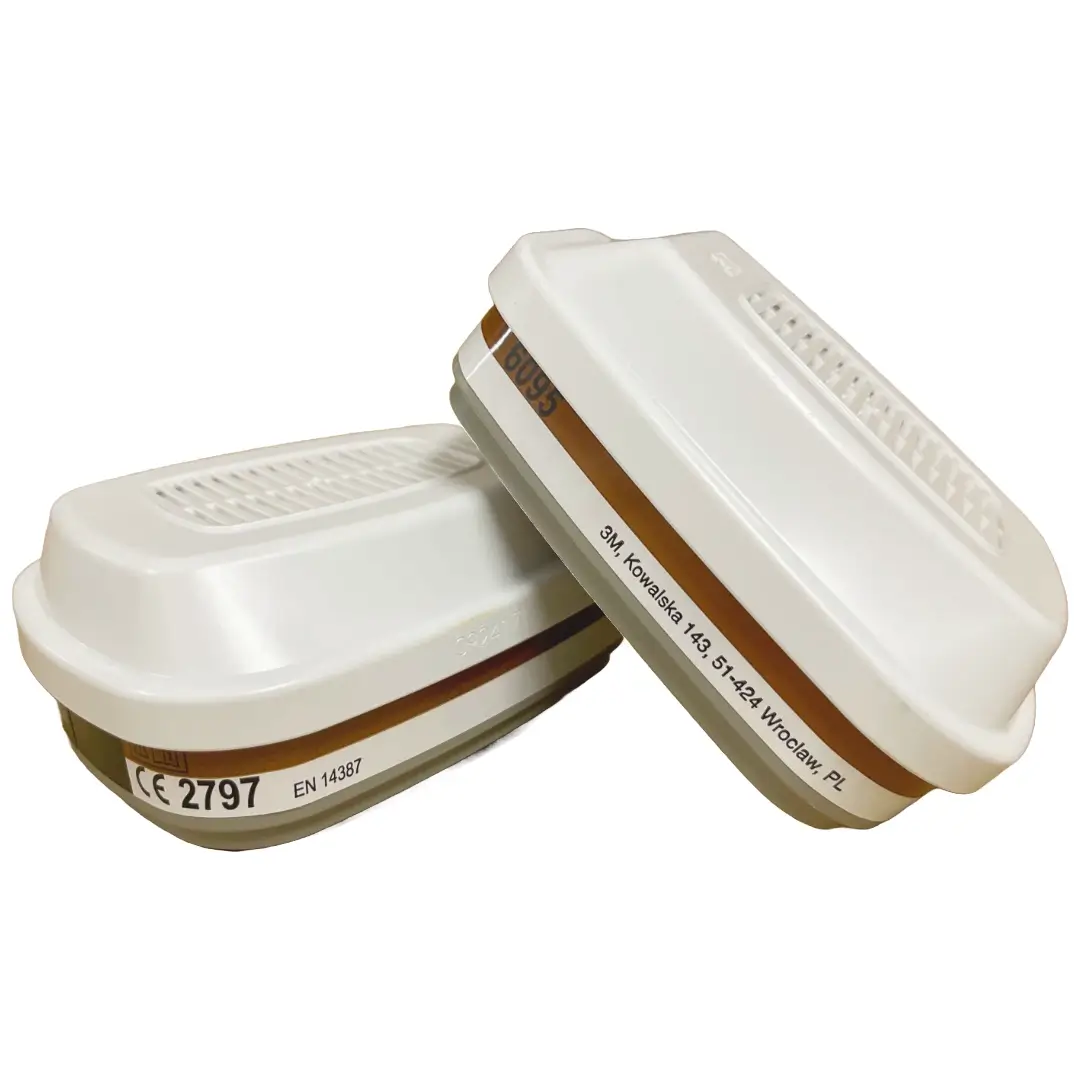
3M 6095 A2P3 R Gas, Vapour & Particulate Filters (1 Pair)
A practical combined A2P3 option for users who need protection from organic vapours and high-efficiency particulate hazards in one cartridge setup.

GVS Elipse Full Face Mask A2P3 with Replaceable Filters – One Size – Organic Vapour, Gas & Particulate Protection
A full face solution with A2P3 combined filtration, ideal when you want integrated eye and respiratory protection, particularly useful for spray and splash-prone tasks.
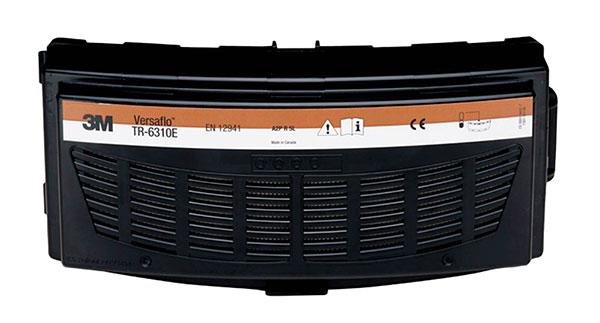
3M™ Versaflo™ TR-6310E A2P Filter
A combined A2P filter designed for compatible powered air systems, helpful where users want assisted airflow for comfort over longer periods.
Quick decision guide: do you need A2, P3, or A2P3?
- Only dust, fume, or mist present? Choose P3
- Only solvent vapours present, no dust/mist? Choose A2
- Spraying, solvent use plus sanding, or any mixed exposure likely? Choose A2P3
- Not sure, or multiple chemicals involved? Use the SDS and COSHH assessment, or ask for help


