

If you have spotted A2P3 printed on a filter, you are looking at a combination filter rating used on many reusable half masks, full face respirators, and some powered air respirators (PAPR). It tells you, in a shorthand, which hazards the filter is designed to protect against and (crucially) the capacity and efficiency class.
📋 Key Takeaways
- A2P3 means protection against organic vapours (A2) plus high-efficiency particulates (P3).
- A2 relates to the filter’s gas/vapour capacity class, not “twice as good” as A1 in every scenario.
- P3 is the highest particulate class in the EN system and is commonly chosen for fine dusts, fumes, and aerosols.
- Always match the filter to the substance and exposure, check the Safety Data Sheet (SDS), and ensure your mask has a good fit.
A2P3 explained: what each part means
Respirator filters in the UK and Europe are commonly marked to standards such as EN 14387 (gas and combined filters) and EN 143 (particle filters). The letters tell you the contaminant type, the numbers tell you the performance class.
“A” = Organic vapours (and some organic gases)
A filters are designed for organic vapours with a boiling point typically above 65°C, which includes many common solvents used in paints, coatings, cleaning, resins, and adhesives.
Common examples where an A filter may be relevant (depending on the product SDS):
- White spirit, turpentine substitute (many solvent-based products)
- Toluene, xylene (industrial solvents)
- Some solvent-based paints and thinners
“2” = Medium capacity for organic vapours
The number after the letter indicates the capacity class for that gas/vapour type:
- 1 = lower capacity
- 2 = medium capacity
- 3 = higher capacity (less common in some product ranges)
So, A2 generally offers greater vapour capacity than A1, which can mean longer service life in the right conditions.
“P” = Particulate protection (dusts, fumes, aerosols)
P filters protect against airborne particulates such as:
- Dust (wood, flour, cement, stone)
- Metal fumes (certain processes)
- Mists and aerosols (some spraying tasks)
“3” = Highest particulate efficiency class
Particulate classes are typically:
- P1 = lower efficiency
- P2 = medium efficiency
- P3 = highest efficiency
A P3 filter is commonly used where very fine particles are present, or where the hazard is more severe (for example, certain hardwood dusts, silica-containing dust, welding fume, or other fine particulates identified via risk assessment).
What an A2P3 filter is used for (real-world examples)
An A2P3 combination filter is chosen when there is a mix of:
- Organic vapours, plus
- Particles (dust, mist, fume)
Typical situations where A2P3 is often considered (subject to COSHH/risk assessment and SDS):
- Spray painting with solvent-based products (vapour plus paint mist)
- Solvent use during sanding or prep (vapour plus dust)
- Resin, fibreglass, composites work (vapours plus particulates)
- Degreasing and cleaning with solvents where aerosols or dust are also present
Many people assume “A2P3” is just for painting. In practice, it is a flexible option whenever both vapours and particles are present. If you only have dust (no solvents), a P3-only filter is often more appropriate. If you only have vapours (no dust/mist), an A2-only filter may be sufficient.
A2P3 does not mean “covers everything”
A2P3 is powerful, but it is not universal. There are other letter codes for other gases:
- B = inorganic gases/vapours (except CO)
- E = acid gases (for example, sulphur dioxide)
- K = ammonia and amines
- AX = low boiling point organic compounds (special category)
If your hazard is not an “A” type vapour, A2 may be the wrong choice.
- No filter works in oxygen-deficient atmospheres. If there is not enough oxygen, you may need air-fed or breathing apparatus, not a filter mask.
- Filters must be selected based on your COSHH assessment and the product Safety Data Sheet (SDS).
- If you can smell or taste contaminants while wearing a correctly fitted respirator, stop work and reassess. Breakthrough can occur, and odour is not a reliable warning for all substances.
Quick comparison: capacity and particulate class
Mask Comparison
| Feature | A1P3 | A2P3 |
|---|---|---|
| Organic vapour capacity | Lower | Medium |
| Particulate efficiency | P3 | P3 |
| Typical use | Shorter tasks, lower vapour loads | Longer tasks, higher vapour loads |
| Bulk/weight | Often slightly lighter | Often slightly heavier |
Other markings you may see alongside A2P3
“R” or “NR” (reusable vs non-reusable particle element)
On combination filters you might see P3 R or P3 NR:
- R = reusable (the particulate part is designed to be used for more than one shift, if not damaged/clogged and if hygiene allows)
- NR = non-reusable (often limited to one shift)
“D” (Dolomite clogging test)
If you see D, it indicates the particle filter passed the dolomite dust clogging test, which generally means better resistance to clogging in high-dust environments.
Colour coding (handy when checking you have the right filter)
- A (organic vapours) is typically brown
- P (particulates) is typically white
Choosing the right A2P3 setup (mask + filter + fit)
A2P3 is a filter rating, but your protection depends on the whole system:
Benefits
- Helps cover mixed hazards (solvent vapour plus dust/mist)
- Often available for both half masks and full face masks
- P3 is a strong choice for fine particulates when risk assessment calls for it
Fit matters as much as the filter
Even the best filter cannot protect you properly if the face seal leaks. For workplace use, face fit testing is commonly required for tight-fitting respirators.
When a full face mask may be preferable
If there is a risk of eye irritation from vapours, mists, or splashes, a full face respirator provides both respiratory and eye/face protection.
Recommended products from The Face Mask Store UK
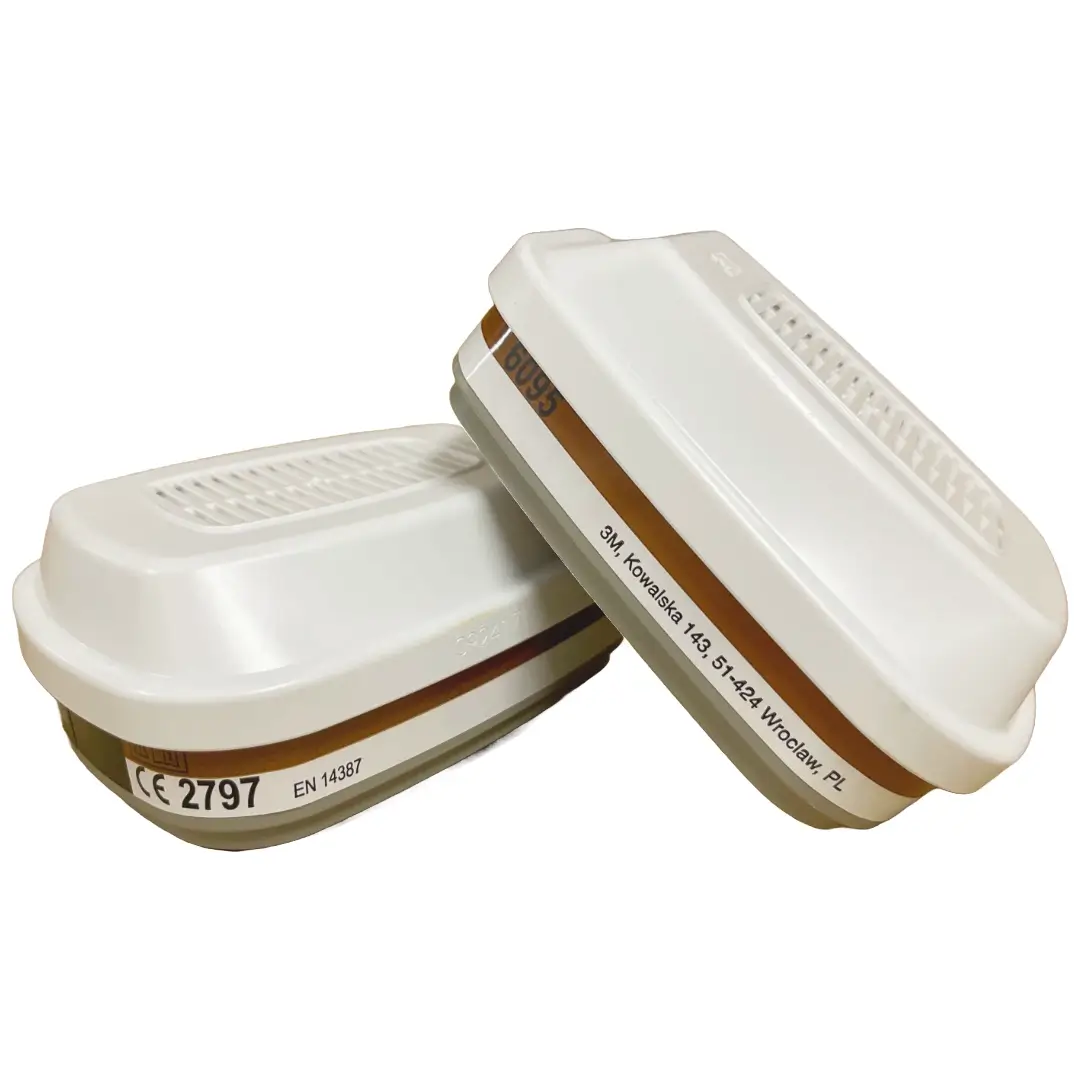
3M 6095 A2P3 R Gas, Vapour & Particulate Filters (1 Pair)
A popular A2P3 option for 3M reusable half and full face respirators, combining organic vapour protection with high-efficiency P3 particulate filtration.

GVS Elipse Full Face Mask A2P3 with Replaceable Filters – One Size – Organic Vapour, Gas & Particulate Protection
A full face respirator option that is ideal when you need A2P3 protection plus eye/face protection, useful for tasks involving vapours and particulates where goggles alone are not enough.

Moldex 7232 Respiratory Box (A2P3 Filters)
A convenient kit-style option that pairs a reusable respirator with A2P3 filters, a practical route if you want a matched system rather than sourcing mask and filters separately.
FAQs about A2P3 filters
Can I use A2P3 for dust only?
It will filter dust (P3), but it may be bulkier and more expensive than a P3-only solution. If there are no vapours, a P3 particulate filter is often the simpler choice.
Can I use A2P3 for all solvents?
Not necessarily. Some chemicals need a different type (for example AX for certain low boiling organics), or a different combined filter (ABEK, etc). Always check the SDS and your COSHH assessment.
How do I know when to change an A2 filter?
There is no single time that fits every job. Change schedules depend on concentration, humidity, temperature, breathing rate, and how the filter is stored between uses. Many workplaces use a planned change-out programme based on risk assessment, or follow manufacturer guidance.


