

Choosing the correct respirator filter is not about “getting the strongest one”, it is about matching the filter type (what it removes) and capacity (how much it can handle) to the hazard you actually have.
📋 Key Takeaways
- Start with the contaminant type: particles (dust, fume, mist) need P filters; gases and vapours need A/B/E/K (and specialist) filters.
- Combined risks are common: many jobs need a combination filter such as A2P3 or ABEKP3.
- Filter “class” matters: numbers like 1, 2, 3 indicate capacity, not “strength” alone, you still must pick the right letter code.
- If oxygen is low or the hazard is unknown, do not use a filter respirator: you may need supplied air or specialist equipment.
- A good face seal is essential: the right filter on a poorly fitting mask can still leave you under-protected.
Step 1: Identify what you are trying to filter out
Before selecting a filter, clarify the hazard using your risk assessment, SDS (Safety Data Sheet), or process info.
Particles vs gases and vapours
- Particles include: nuisance dust, silica, wood dust, cement, flour, welding fume, metal fume, smoke particles, aerosols, oil mist.
- Gases and vapours include: solvents, paint vapours, isocyanates (often present in 2K paints), acid gases, ammonia, chlorine, organic vapours.
If you can smell a chemical, that does not automatically mean your filter is wrong. Some substances have very low odour thresholds, and odour can also indicate breakthrough. Always follow the cartridge change schedule and the manufacturer guidance.
Step 2: Choose the filter standard and code (EN 143 and EN 14387)
In the UK and EU, common reusable respirator filters follow:
- EN 143 for particle filters (P1, P2, P3)
- EN 14387 for gas and vapour filters (A, B, E, K, etc), often combined with P ratings
Particulate filters (P1, P2, P3): what they cover
Particulate filters capture solid and liquid aerosols. Typical markings include P1, P2, P3 (sometimes with extra letters like R or D).
Filter Class Comparison (Particles)
| Filter class | Typical use | Examples |
|---|---|---|
| P1 | Low toxicity dusts | General nuisance dust in low concentrations |
| P2 | Medium toxicity particles | Wood dust, general construction dusts, many mists |
| P3 | High toxicity particles, very fine aerosols | Silica dust, welding fume, lead dust, many hazardous powders |
What do R and D mean?
- R: reusable (more than one shift, if the manufacturer permits)
- NR: non-reusable (single shift)
- D: passed the dolomite clogging test, better performance in high dust environments
Gas and vapour filter types (A, B, E, K and specialist codes)
Gas and vapour filters are selected by letter code, not P-rating.
Filter Code Quick Guide (Gases and Vapours)
| Code | Protects against | Common examples |
|---|---|---|
| A | Organic vapours (boiling point > 65°C) | Many solvents, thinners, paints, adhesives |
| B | Inorganic gases and vapours (not CO) | Chlorine, hydrogen sulphide (process dependent) |
| E | Acid gases | Sulphur dioxide, hydrogen chloride |
| K | Ammonia and amines | Ammonia-based chemicals |
| AX | Low boiling organic vapours (bp ≤ 65°C) | Some very volatile solvents, specialist use |
| Hg | Mercury vapour | Mercury handling |
| NO | Nitrogen oxides | Specialist industrial exposure |
| CO | Carbon monoxide | Escape and specialist applications only |
Capacity classes: 1, 2, 3
Gas/vapour filters often include a number (for example A1 or A2). This generally indicates capacity, not that it covers different chemicals:
- 1: lower capacity
- 2: medium capacity (common for industrial use)
- 3: higher capacity (bulkier, higher capacity)
Step 3: Decide if you need a combination filter (often you do)
Many real-world jobs create both particles and vapours. In these cases, choose a combination filter, for example:
- A2P3: organic vapours + high efficiency particulate
- ABEK1P3: broad-spectrum gases + high efficiency particulate
Common “job to filter” matches
- Sanding, cutting, sweeping dust: usually P2 or P3 depending on the material (silica typically pushes you to P3).
- Welding, grinding metal: commonly P3 for fume and fine particulates.
- Spray painting with solvent-based paints: typically A2P3 (vapour + overspray particles).
- Cleaning with ammonia-based products: typically K plus particulate if aerosols are present.
- Mixed/unknown chemicals: do not guess, use SDS data and professional advice.
Step 4: Check the “stop signs” where filters are the wrong solution
Filter respirators (half masks, full face masks, PAPRs with filters) are not suitable for:
- Oxygen-deficient atmospheres (oxygen below safe levels)
- Unknown contaminants or unknown concentrations
- Immediately dangerous to life or health (IDLH) conditions
- Confined spaces without proper assessment and controls
In these situations you may need supplied air or escape equipment appropriate to the risk.
Step 5: Make sure the filter fits the mask, and the mask fits the face
Even the right filter must be:
- Compatible with your respirator (bayonet fittings differ by brand and model)
- Correctly fitted and checked each time (user seal check)
- Face-fit tested (required in many workplaces for tight-fitting RPE)
If you are using a tight-fitting half mask or full face mask at work, face fit testing is a key part of compliance under UK RPE guidance.
Practical examples using popular filter combinations
Example A: Organic vapours and dust (A2P3)
Typical for paint prep and many solvent-handling tasks where particles are also present.
Example B: Multi-gas coverage plus particulates (ABEK2P3)
Useful where there are multiple possible gas types, plus dusts, smoke, or mist.
Recommended products from The Face Mask Store UK
Below are three proven options from our catalogue, covering common “match the filter to the hazard” scenarios.
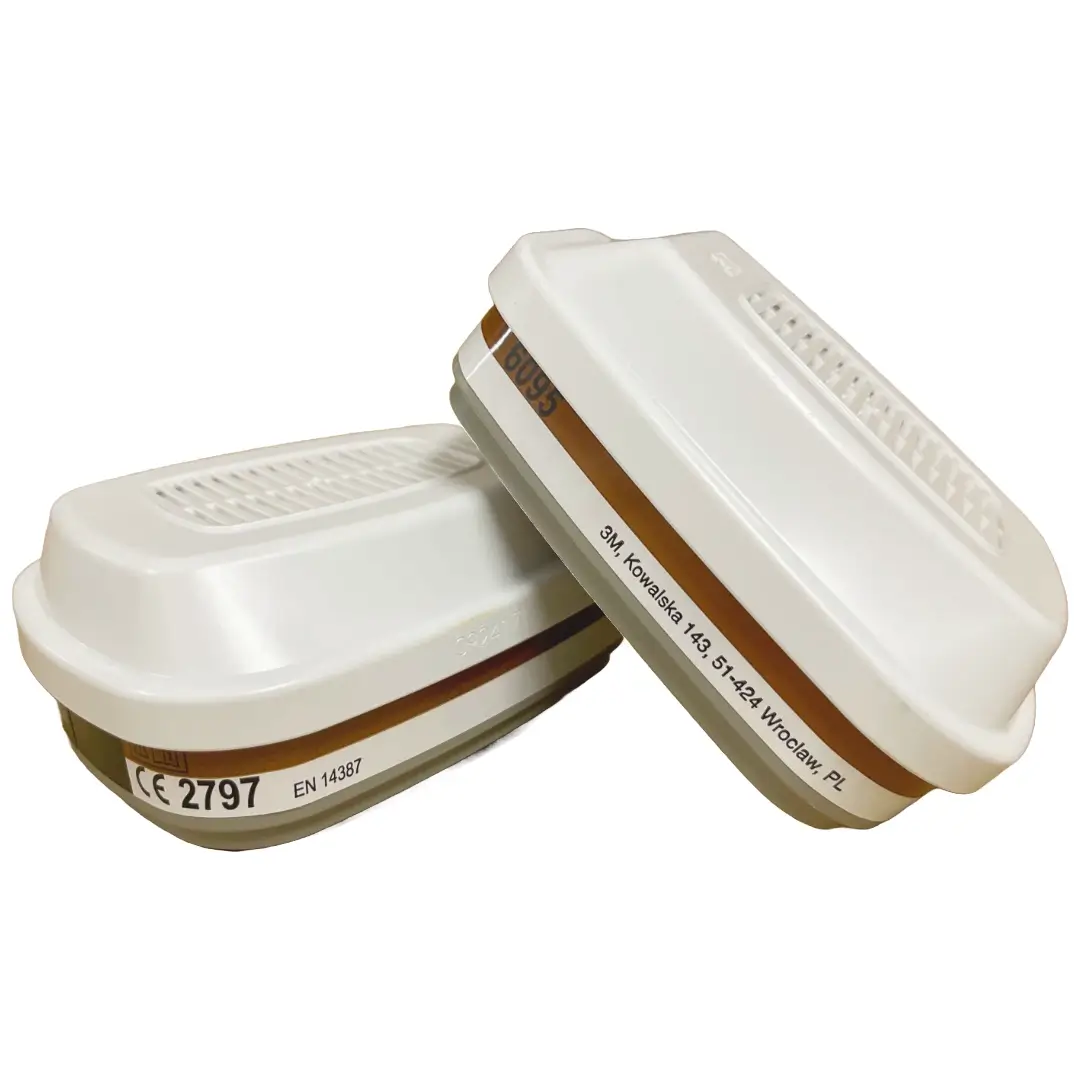
3M 6095 A2P3 R Gas, Vapour & Particulate Filters (1 Pair)
A reliable A2P3 combination filter choice for jobs involving organic vapours (many solvents/paints) plus fine hazardous particulates.

3M 6099 ABEK2P3 Combination Filter Particulate + Gas/Vapour
A higher coverage ABEK2P3 combination filter for mixed environments where the gas/vapour type could vary, while still providing P3 particulate protection.

GVS Elipse Full Face Mask A2P3 with Replaceable Filters
A full face option that combines respiratory protection with eye/face protection, supplied as an A2P3 solution for organic vapours plus particulates.
Quick checklist: what to confirm before you buy filters
Benefits
- Confirm the contaminant is particle, gas/vapour, or both
- Use the SDS and workplace monitoring where available
- Select the correct code (P, A, B, E, K, etc) and capacity class
- Ensure mask and filter compatibility
- Plan for filter change-out, storage, and fit testing where required


