
Hypoallergenic Face Masks: Gentle Protection for Sensitive Skin
Posted on 8th May 2025

A question we commonly hear: “How can I stay protected without irritating my skin?”
For many, face masks remain essential for safeguarding health, easing allergy symptoms, or reducing exposure to airborne pollutants. Yet those with reactive skin or sensitivities often face a frustrating dilemma: standard masks can trigger redness, itching, irritation, or breakouts like “maskne” (acne caused by mask wear). This is where hypoallergenic face masks step in—innovatively crafted to deliver safety and comfort, prioritizing both respiratory wellness and skin-friendly design.
These masks are specifically crafted to minimise the risk of allergic reactions and skin irritation. They use materials less likely to trigger sensitivities, often avoiding common culprits such as harsh dyes, fragrances, latex, and certain synthetic elastic materials found in conventional masks. Let’s explore why they matter, the types available, and how to choose the best option for your needs.
Key Highlights: Why Consider Hypoallergenic Masks?
Understanding the Need: Benefits Explained
- Comfort for Sensitive Skin
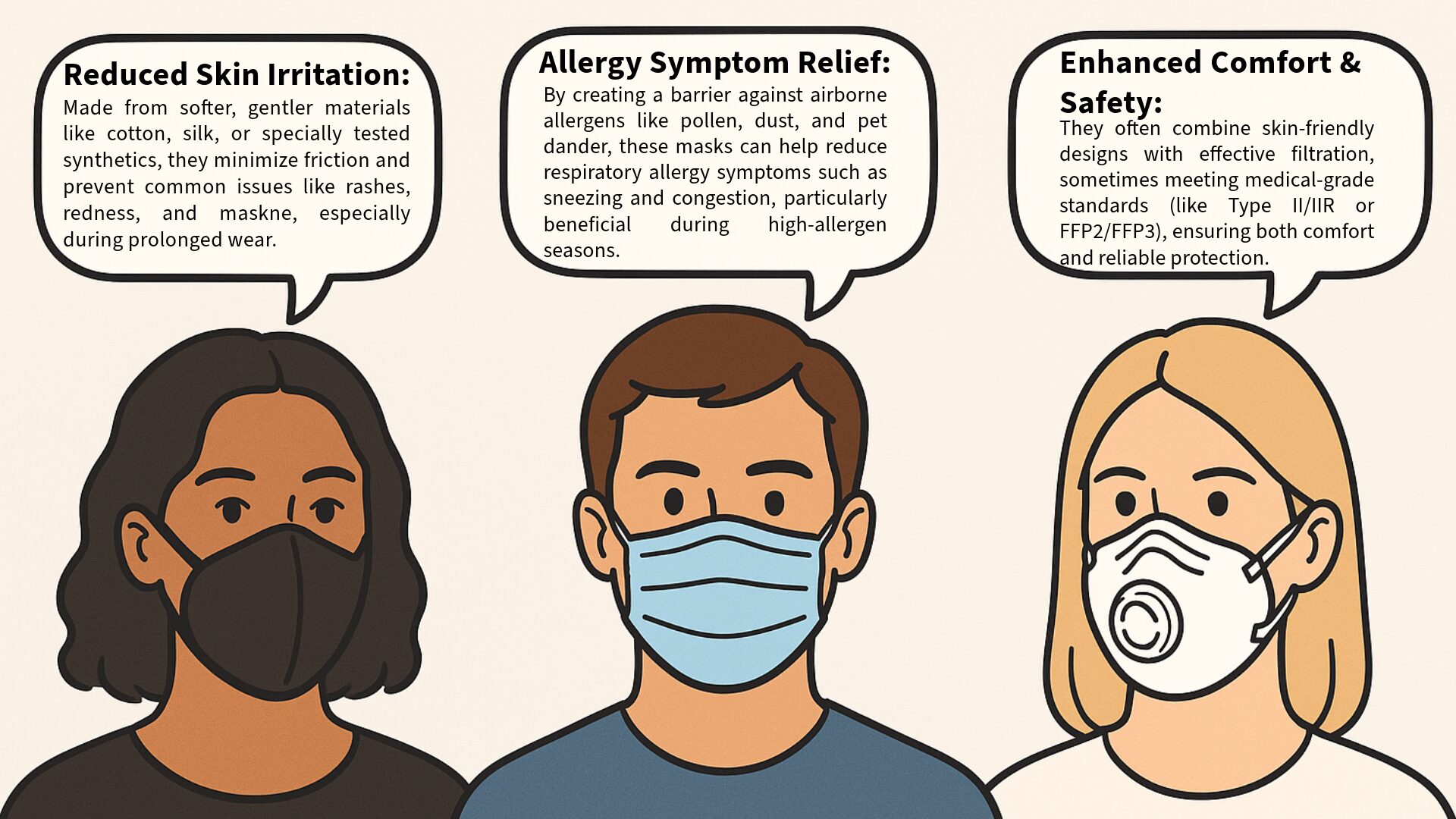
Constant friction between a mask and the skin, combined with trapped moisture and heat, can wreak havoc on sensitive complexions. Hypoallergenic masks address this by using breathable, soft materials that reduce rubbing and allow for better airflow. Natural fibres like organic cotton and silk are often recommended by dermatologists and allergists for their gentle touch and lower potential for irritation. Avoiding chemical treatments, dyes, and fragrances further minimizes the risk of contact dermatitis.
- Reduce Allergy and Asthma Concerns
For those battling seasonal allergies , masks can serve a dual purpose. While they may not eliminate all symptoms (like eye allergies), they effectively filter out many airborne triggers. Hypoallergenic masks, particularly those with good filtration capabilities, can significantly reduce the inhalation of pollen, dust mites, mould spores, and pet dander.
- Safety Without Sacrifice
Choosing a hypoallergenic mask doesn’t mean compromising on protection. Many options, including disposable surgical-style masks and FFP-rated respirators, are available with hypoallergenic properties. These masks adhere to the EN safety standards ensuring high filtration efficiency against particles, bacteria, and viruses, while incorporating skin-friendly inner linings and materials.
Exploring Different Types of Hypoallergenic Masks
Hypoallergenic masks come in various forms, catering to different needs and preferences:
Material Matters
NATURAL FIBRES
- Cotton: Often made from 100% organic cotton, these masks are breathable, soft, and washable. They are an excellent choice for general use and for those with severe sensitivities, as they are typically free from harsh chemicals.
- Silk: Known for its smooth texture, silk reduces friction against the skin. It’s naturally hypoallergenic and less absorbent than cotton, potentially reducing moisture build-up.
- Bamboo Fibre: Gaining popularity for its softness, breathability, and moisture-wicking properties, bamboo fibre offers a comfortable and sustainable option.
MEDICAL-GRADE OPTIONS
- Hypoallergenic Surgical Masks (Type II/IIR): These disposable masks meet medical standards (EN 14683) for filtration and fluid resistance (Type IIR). Hypoallergenic versions are typically free from dyes and common irritants, often featuring soft inner layers dermatologically tested for skin compatibility.
- FFP2/FFP3 Respirators: Offering higher levels of filtration against airborne particles (compliant with EN 149), some FFP respirators are designed with hypoallergenic inner linings to minimise pressure marks and irritation during extended wear. These are ideal for high-risk environments or individuals requiring maximum protection.
DESIGN CONSIDERATIONS
- Ear Loops vs. Ties: Latex or synthetic elastic ear loops may irritate some wearers. Masks with soft fabric ties or latex-free elastic alternatives provide a gentler fit for those with sensitivities.
- Reusable vs. Disposable: Reusable masks (such as cotton or silk) are eco-friendly and cost-effective in the long term but require regular washing with hypoallergenic detergent. Disposable masks offer convenience and are often preferred in medical settings or when high filtration is essential.
Hypoallergenic Options at TheFaceMaskStore
For those with sensitive skin, finding a face mask that offers adequate protection without causing irritation can feel like a challenge. Thankfully, brands like Omnitex offer options designed with comfort in mind.
-
Omnitex FFP2
 If you’re specifically seeking a mask labelled for its gentle properties, the Omnitex FFP2 respirator is a strong contender. Available in both Black and White, this mask explicitly states its hypoallergenic material on the packaging.
-
Omnitex Type IIR
 Offering a touch of personalisation with Black, Blue, and Pink options, the Omnitex Type IIR surgical mask is also an interesting consideration for those with sensitivities. Although not explicitly labelled “hypoallergenic,” its Latex-Free, Nickel-Free, and Cadmium-Free composition addresses several common triggers of allergies.
Choosing the Right Hypoallergenic Mask for You
- Identify Your Needs: Are you primarily concerned about skin irritation, allergy triggers, or requiring high filtration for medical or work purposes? Your priority will guide your choice.
- Check Materials & Ingredients: Read product descriptions carefully. Look for explicit mentions of “hypoallergenic,” “sensitive skin,” “dye-free,” “fragrance-free,” or specific materials such as 100% organic cotton or silk. If you have a known latex allergy, confirm ear loops or ties are latex-free.
- Look for Certifications: For reliable protection, particularly in high-risk settings, check for certifications like EN 14683 (surgical masks) or EN 149 (FFP respirators).
- Prioritise Fit: A poorly fitting mask is uncomfortable and less effective. Look for adjustable features like nose wires and soft, adaptable ear loops or ties.
Consider Reusability: If opting for reusable masks, wash them regularly with a gentle, hypoallergenic detergent to maintain hygiene and effectiveness. - Patch Test (If Possible): If you’re highly sensitive, trial a new mask type for a short period initially to assess how your skin reacts.
Comparing Hypoallergenic Mask Characteristics
This chart helps you compare common hypoallergenic masks based on key features to help you choose the right one. Remember, the ratings are approximate (1=Low, 5=High) and can vary.
The chart highlights key trade-offs:
natural fibre masks excel in hypoallergenic properties and reusability but offer lower filtration compared to certified medical-grade masks or respirators. Hypoallergenic versions of medical-grade masks strike a balance between filtration and skin compatibility but are typically single-use.
Key Considerations Summarised
The following mind map provides a quick overview of the essential factors surrounding hypoallergenic face masks:
Your Path to Comfortable Protection Starts Here
Navigating the world of face masks when you have sensitive skin or allergies doesn’t have to be a source of frustration. By understanding the unique benefits of hypoallergenic options, exploring the different types and materials available, and considering your individual needs, you can confidently choose a mask that prioritizes both your health and your comfort. Remember to pay close attention to material composition, certifications, and fit. By making informed choices, you can breathe easier knowing your mask is working to protect you without compromising the health and well-being of your skin. So, take the time to explore the options and prioritise your sensitivities.
Latest Blog Posts


How Individual Masks Are Picked and Packed When You Order Less Than a Full Box
Posted on 9th Aug 2026


