

Working with organic solvents can expose you to vapours that are not stopped by standard dust masks. The right choice depends on which solvent, how much vapour, whether there is also spray mist or dust, and how long you need protection for.
📋 Key Takeaways
- FFP2/FFP3 dust masks do not protect against solvent vapours, you need a respirator with gas/vapour cartridges (activated carbon).
- For most paint thinners and aromatic solvents like toluene and xylene, look for A-class organic vapour filters (often A1 or A2).
- Acetone (low boiling point) often requires AX-rated filters, not standard A1/A2, so check the SDS and filter marking.
- If your job creates aerosols or dust as well as vapour (spraying, sanding between coats), choose a combination filter like A2P3.
- Fit and seal matter, a great filter on a poor-fitting mask still leaks.
1) Why organic solvents need a different type of mask
Solvents like acetone, MEK (methyl ethyl ketone), toluene, and xylene mainly present an inhalation risk as organic vapours. These behave very differently to solid particles like dust.
- Disposable particulate masks (FFP1/FFP2/FFP3, N95) are designed to capture particles, they do not adsorb vapours.
- To protect against vapours, you need an elastomeric half mask or full face mask, or a powered/supplied-air system, fitted with the correct EN 14387 gas/vapour filter.
Respirators with gas/vapour cartridges must not be used in oxygen-deficient atmospheres, confined spaces, or unknown/very high concentrations. If you cannot confirm conditions are safe, you may need supplied air and a proper risk assessment.
2) Step-by-step: how to choose the right respiratory protection
Step 1: Check the Safety Data Sheet (SDS)
Your SDS (Section 8) typically tells you:
- The type of respirator recommended
- The filter type (for example “A2”, “AX”, “A2P3”)
- The exposure limits (WELs) and any special warnings
Step 2: Identify whether it is vapour only, or vapour plus particles
Typical scenarios:
Degreasing, wipe-downs, brush cleaning, small spill clean-up: mostly vapour
→ You may only need A-class organic vapour filtration.Spray painting, aerosol application, fogging, high-pressure spraying: vapour + fine mist
→ Consider A2P3 (organic vapour + high efficiency particulate).Sanding filler/paint, cutting GRP, working with powders near solvents: vapour + dust
→ Also points to A2P3 or similar combination.
Step 3: Choose the correct organic vapour filter class (A vs AX, and A1 vs A2)
A filters (A1, A2, A3)
- A = organic vapours with boiling point above 65°C
- The number (1, 2, 3) generally indicates capacity (how much vapour the carbon can adsorb before breakthrough). In practice:
- A1: lighter duty, shorter duration
- A2: higher capacity, better for stronger odours or longer tasks
AX filters
- AX = organic compounds with boiling point at or below 65°C
- These tend to break through standard A filters faster because they are more volatile.
- Acetone is a common “gotcha” here because its boiling point is about 56°C, so AX is often the correct choice.
Smell is not a reliable indicator that your filter is still working. Many solvents can be detected by smell at different levels than their exposure limits, and some people become desensitised during work. Always follow a planned change schedule.
3) Quick guide: acetone vs MEK vs toluene vs xylene (filter selection)
Here is a practical starting point. Always confirm with the SDS for your exact product and mixture.
| Solvent | Typical hazard in air | What to look for on the filter | Notes |
|---|---|---|---|
| Acetone | Organic vapour | AX (and AXP3 if mist/dust) | Often needs AX due to low boiling point |
| MEK | Organic vapour | A1/A2 (or A2P3) | Boiling point is typically above 65°C, but it is still very volatile |
| Toluene | Organic vapour | A1/A2 (or A2P3) | Common in thinners, strong odour, higher capacity often preferred |
| Xylene | Organic vapour | A1/A2 (or A2P3) | Similar approach to toluene |
4) Half mask, full face, or powered air?
Your choice is not only about filtration, it is also about seal, comfort, and eye protection.
Mask Comparison
| Option | Protects against solvent vapour? | Eye protection | Best for | Limitations |
|---|---|---|---|---|
| Disposable FFP2/FFP3 | No | No | Dust-only tasks | No vapour protection |
| Half mask + A/AX filter | Yes | No | Wipe-downs, mixing, bench work | Need separate eye protection, fit is critical |
| Full face mask + A/AX filter | Yes | Yes | Splash risk, higher exposure, better seal | Heavier, needs care and storage |
| PAPR/supplied air | Yes (with correct setup) | Often yes | Long shifts, higher comfort, some high-risk work | More cost and complexity, needs correct configuration |
5) Fit, testing, and change-out: what keeps you safe day-to-day
Benefits of doing the basics well
- Better real-world protection (less inward leakage)
- Less fatigue and fewer headaches caused by poor sealing or wrong selection
- Lower overall cost because filters last as expected, and aren’t “used up” by bad practices
Practical essentials
- Fit test tight-fitting masks (especially in workplace settings)
- Be clean-shaven where the seal sits
- Store filters sealed when not in use, carbon can adsorb background vapours off the job
- Replace filters on a planned schedule based on SDS guidance, exposure, and duration
6) Product recommendations from The Face Mask Store UK
Below are options that match common organic-solvent tasks. Filter choice must match the specific solvent and concentration, especially for acetone.

Moldex 9600 AX Gas & Vapour Filters
A strong option when you need AX-rated protection, commonly relevant for low boiling point solvents like acetone. Ideal for users who already have a compatible Moldex mask system.
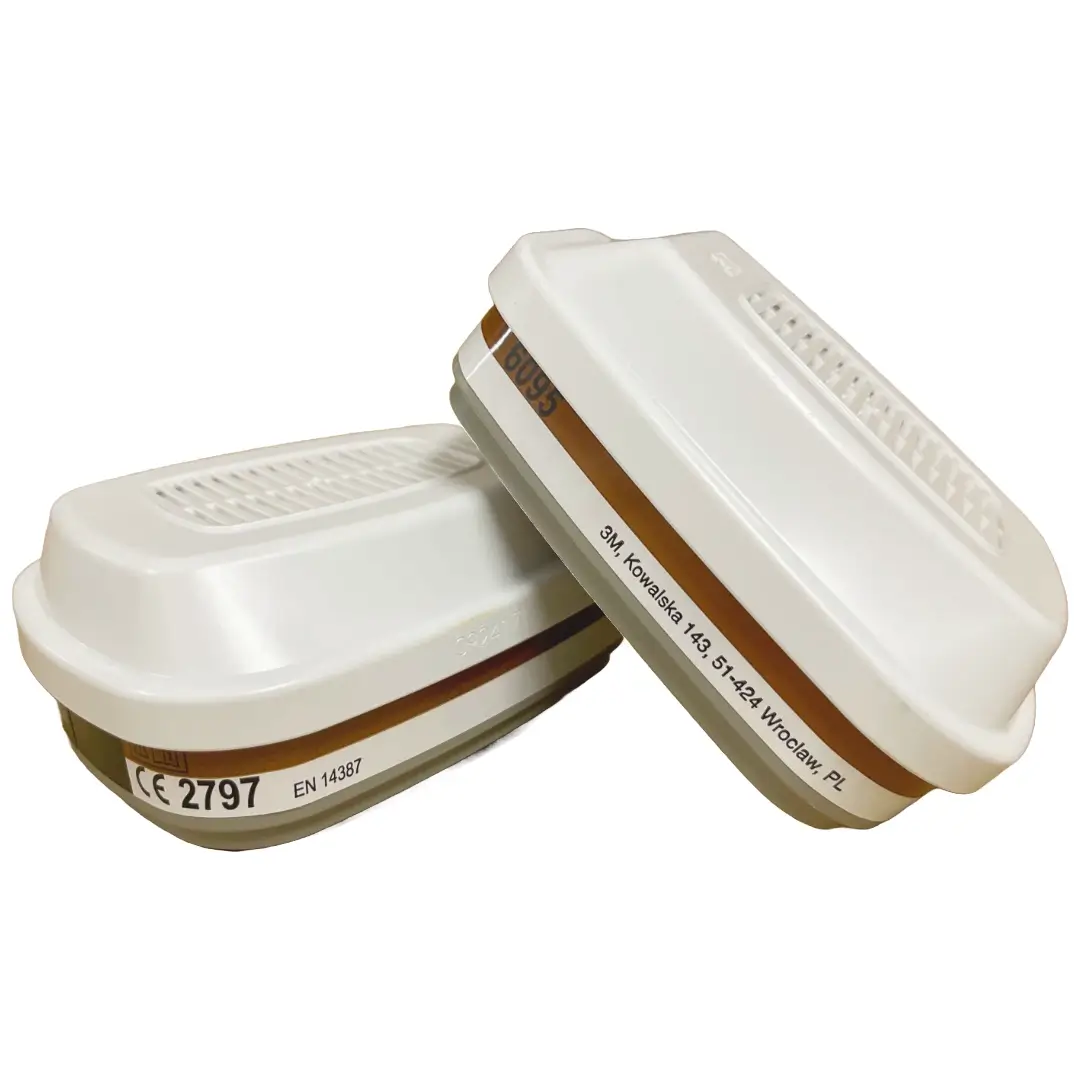
3M 6095 A2P3 R Gas, Vapour & Particulate Filters (1 Pair)
A versatile combination filter for jobs involving organic vapours plus particulate, for example spraying where mist is present or solvent work in dusty environments. The A2 capacity suits longer tasks than A1 in many applications.

GVS Elipse Full Face Mask A2P3 with Replaceable Filters
A full face option when you want eye protection as well as respiratory protection, helpful for solvent handling where splashes or irritant vapours are a concern. The A2P3 format suits vapour plus particulate situations.
7) Common mistakes to avoid
- Buying an FFP3 and assuming it covers solvents, it does not.
- Choosing A1/A2 for acetone without checking if AX is required for your solvent or mixture.
- Using vapour cartridges for spray painting without a particulate rating (you often need A2P3).
- Waiting until you “smell it” to change filters, by then you may already be past safe levels.


