

Working with epoxy is hugely rewarding, but it can also expose you to harmful vapours (from resin, hardener, and thinners) and fine dust (from sanding and cutting cured epoxy). The right respiratory protection depends on which stage of the job you are doing and what chemicals are in your specific product.
📋 Key Takeaways
- FFP2/FFP3 dust masks do not protect against epoxy vapours, they are for particles only (useful for sanding cured resin).
- For most epoxy mixing, coating, and cleanup you need organic vapour + particulate protection, typically A1/A2 + P3 (a combination filter).
- Epoxy hardeners can cause sensitisation, meaning repeated exposure can trigger worsening reactions over time, prevention is key.
- Always check the SDS (Safety Data Sheet) for your resin, hardener, and solvents to confirm the correct filter type.
- Fit and seal matter, a high-spec filter is not effective if the mask does not seal to your face.
What are the respiratory hazards with epoxy?
Epoxy “resin work” is not just one exposure type. It changes depending on the task:
Vapours (during mixing, pouring, coating, and cleaning)
Even when epoxy is described as “low odour” it can still release chemicals that you do not want to inhale. Common sources include:
- Epoxy resin components
- Amine hardeners (often the sharper smell, can be irritating)
- Solvents and cleaners such as acetone, IPA, xylene substitutes, or proprietary thinners
- Additives, dyes, pigments, and sprays
Particles and dust (during sanding, grinding, drilling, cutting)
Cured epoxy can create very fine dust, and if you sand fillers (silica, microballoons) or carbon or glass fibre composites, dust risks increase.
Epoxy systems can cause skin and respiratory sensitisation. Once sensitised, even small exposures can trigger reactions. If you have had rashes, wheezing, chest tightness, or persistent irritation when working with epoxy, stop and seek medical advice, and review your controls (ventilation, PPE, work practices).
Why an FFP3 mask is not enough for epoxy mixing
FFP-rated disposable respirators (FFP2/FFP3) are designed for particulate filtration. They are excellent for sanding dust, but they do not filter organic vapours from resins, hardeners, or solvents.
If your main exposure is vapour, you need a reusable respirator with the correct gas and vapour filter, commonly:
- A1 or A2 for organic vapours (brown code in EN 14387)
- P3 for particulates (high-efficiency particle filtration)
This is why many epoxy users choose combination filters like A2P3 for general workshop tasks, especially when switching between coating and light sanding.
Choosing the right mask and filter for epoxy: quick decision guide
1) If you are sanding or cutting fully cured epoxy
- Choose FFP3 (or at least FFP2) for dust.
- Consider goggles or a full-face option if dust is heavy.
2) If you are mixing, pouring, brushing, rolling, or cleaning with solvents
- Choose a tight-fitting half-face or full-face respirator with organic vapour + particulate filtration, typically A1P3 or A2P3.
3) If you are spraying coatings that include solvents (or using unknown products)
- You may need higher-level RPE, and spray tasks often demand stronger controls.
- Always check the SDS and your risk assessment.
A1 vs A2: both are organic vapour filters, A2 generally has higher capacity than A1. Filter selection depends on contaminant concentration, volatility, and duration of work. Your SDS and risk assessment should drive the final choice.
Mask Comparison
| Use case | Suitable protection | Pros | Cons |
|---|---|---|---|
| Sanding cured epoxy | FFP3 disposable | Simple, low cost, great for dust | No vapour protection |
| Mixing, coating, cleanup (vapours + occasional dust) | Reusable respirator with A2P3 combination filtration | Protects from vapours and particles, better seal | Needs correct fit, ongoing filter replacement |
| Heavy dust + vapours, need eye/face protection | Full-face A2P3 respirator | Adds eye protection, often better overall sealing | Higher cost, more cleaning and storage needs |
Recommended masks and filters from The Face Mask Store UK
Below are proven options from our catalogue, suitable for common epoxy workflows. If you are unsure, tell us what resin system and solvents you use and we can point you to the best match.

GVS Elipse Full Face Mask A2P3 with Replaceable Filters – One Size – Organic Vapour, Gas & Particulate Protection
A strong all-in-one option for epoxy work where you want organic vapour protection plus P3 particulate filtration, with the added benefit of full-face coverage for dusty sanding and splash-prone tasks.
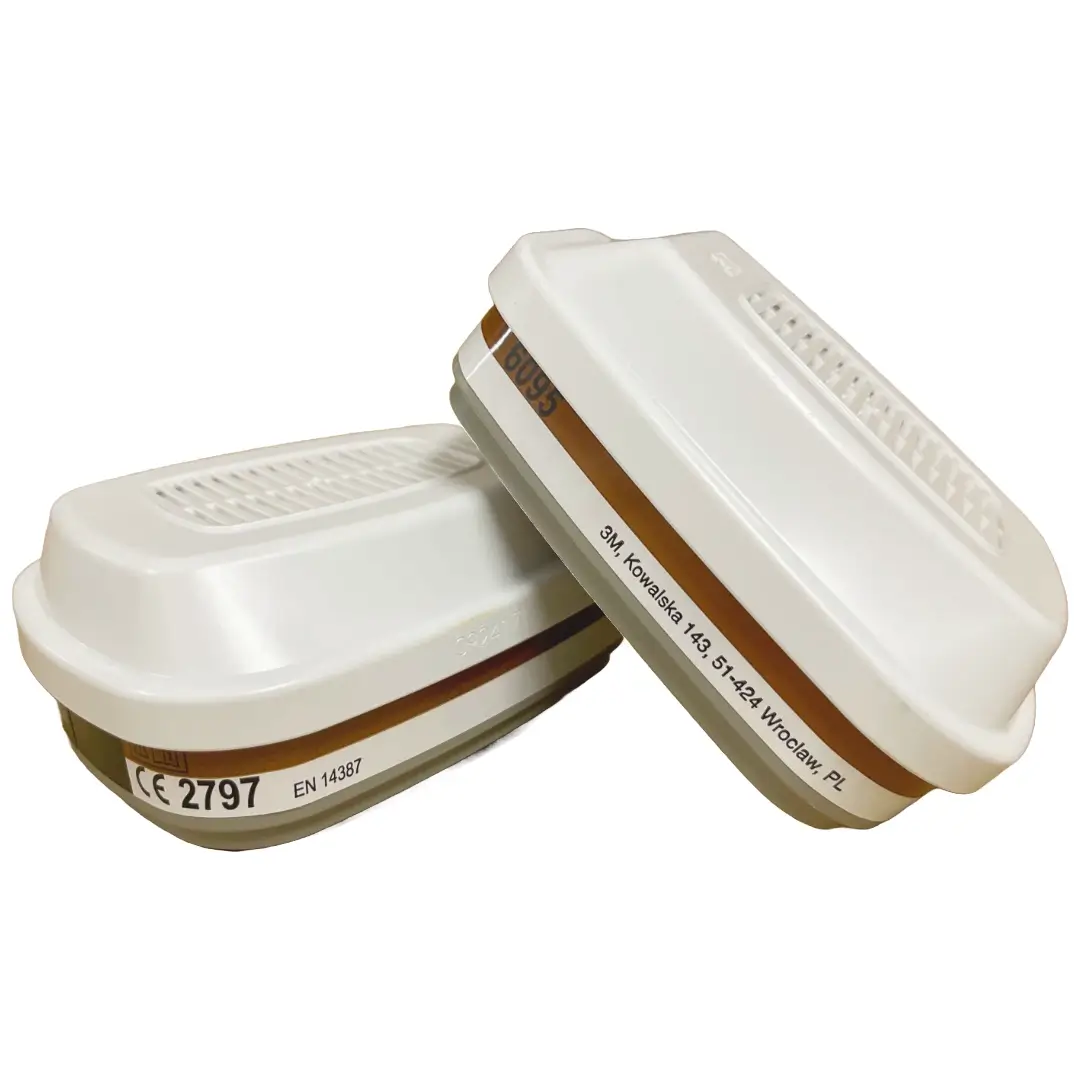
3M 6095 A2P3 R Gas, Vapour & Particulate Filters (1 Pair)
A popular A2P3 combination filter choice for users running compatible 3M reusable respirators. Ideal for many epoxy setups involving vapours from resin, hardener, and solvents, plus fine dust.

3M Aura 9320D+ Unvalved FFP2 Disposable Respirator
A comfortable disposable option for particulate-only tasks, such as sanding cured epoxy when vapours are not the concern. If you can smell solvents or uncured epoxy components, switch to a vapour-capable reusable setup.
Getting the fit right (it matters as much as the filter)
For tight-fitting half-face and full-face respirators, protection depends on a good seal.
Best practices:
- Be clean shaven where the mask seals.
- Perform a user seal check each time you put it on.
- For workplace use in the UK, tight-fitting RPE should be face-fit tested as part of your COSHH controls.
Extra controls that make your mask work better
A respirator is only one part of exposure control. For epoxy, also consider:
- Local extraction near the mixing and pouring area
- Keeping lids on containers, using smaller decant bottles
- Avoiding skin contact, sensitisation is often driven by dermal exposure too
- Wet sanding or on-tool extraction to reduce airborne dust
Benefits of using the right RPE for epoxy
- Reduced exposure to organic vapours during mixing and application
- Better protection from fine particulate dust during sanding and cutting
- Lower risk of sensitisation from repeated low-level exposure
- More comfortable work sessions, especially in enclosed workshops


