

Choosing the right respirator filter can feel like decoding a foreign language, especially when you see labels like P3, A2, ABEK1P3, or A2P3 R D. These markings matter because they tell you what the filter is designed to protect you from and, just as importantly, what it will not protect you from.
This guide explains the most common filter types used in the UK and Europe (EN standards), what the letters and numbers mean, and how to match a filter to your task.
📋 Key Takeaways
- P-filters (P1/P2/P3) protect against particles like dust, fumes, fibres and aerosols, but not gases or vapours.
- Gas and vapour filters (A, B, E, K, etc.) protect against specific chemical families, but not dust unless paired with a particulate stage (for example A2P3).
- The number (1, 2, 3) indicates capacity, not “strength” in a simple sense, bigger jobs usually need higher capacity.
- Markings like R, NR, D and Hg, NO, AX, SX add critical information about reusability, clogging resistance and special-use gases.
- Always confirm the hazard via a COSHH assessment and Safety Data Sheet (SDS), then select the correct filter type and ensure a good face seal.
1) Filter standards you will see in the UK (and why they matter)
Most reusable respirator filters in the UK follow these European standards:
- EN 143: particulate filters (P1/P2/P3)
- EN 14387: gas and combination filters (A, B, E, K etc., often combined with P)
Disposable filtering facepiece masks (like FFP2 and FFP3) are a different category (EN 149). They do not use replaceable filter cartridges, but the “P” concept (particle protection) is similar.
Respirators only work properly with a correct fit and seal. A higher-rated filter cannot compensate for a poor fit, incorrect size, facial hair in the seal area, or an incompatible mask and filter combination.
2) Particulate filter types: P1 vs P2 vs P3
Particulate filters protect against solid and liquid airborne particles such as:
- wood dust, silica dust, concrete dust
- welding fume (metal fume)
- mists and aerosols (oil or water-based)
- fibres (including many insulation and construction dusts)
Mask Comparison
| Feature | P1 | P2 | P3 |
|---|---|---|---|
| Typical use | low-toxicity dusts | medium toxicity dusts and fumes | high toxicity dusts, fumes and fine particles |
| Protection level (general) | lowest | medium | highest |
| Common examples | nuisance dust | wood dust, sanding, many industrial dusts | welding fume, fine hazardous dusts, high-risk particles |
People often ask for “a P3 filter” when they mean “the best dust filter”. That is a reasonable starting point for many industrial tasks, but you still need to check whether gases or vapours are also present. If they are, you may need a combination filter (for example A2P3 or ABEK1P3).
3) Gas and vapour filter letters: A, B, E, K (and what they cover)
Gas and vapour filters use letters to indicate the chemical family:
- A: Organic vapours (many solvents), typically with boiling point above 65°C
Examples: toluene, xylene, many solvent-based paints and thinners - B: Inorganic gases and vapours
Examples: chlorine, hydrogen sulphide (task dependent, always check SDS) - E: Acid gases
Examples: sulphur dioxide, hydrogen chloride (again, check SDS) - K: Ammonia and amines
Examples: ammonia-based cleaning chemicals, certain industrial processes
What does ABEK mean?
ABEK is a multi-gas filter type that combines:
- A + B + E + K protection in one cartridge
This is often chosen where multiple gas/vapour hazards could be present, or where the exact mixture can vary. Many users pair ABEK with a particulate stage for “all-round” coverage in mixed environments (dust plus vapours).
4) The numbers: 1, 2, 3 (capacity classes)
The number after the letter indicates capacity:
- Class 1 (A1, B1, E1, K1): lower capacity, typically lighter or shorter duration work
- Class 2 (A2, B2, E2, K2): medium capacity, often preferred for more sustained exposure
- Class 3 (A3, B3, E3, K3): higher capacity, usually bulkier, for heavier duty needs
Capacity is not the same as “how poisonous” a chemical is. Even a correct filter type can be overwhelmed if concentrations are high, oxygen is low, or exposure time is too long. Always follow your COSHH assessment and the manufacturer guidance.
5) Combination filters (for example A2P3, ABEK1P3)
A combination filter covers both:
- Gases/vapours (A, B, E, K)
- Particles (P1/P2/P3)
Common examples:
- A2P3: organic vapours (class 2) + high efficiency particulate (P3)
- ABEK1P3: multi-gas (class 1) + P3 particulate
These are common for tasks like:
- spray painting or solvent use in dusty environments
- chemical handling where particulate contamination is also present
- maintenance jobs where hazards vary across the site
6) Extra markings you may see: R, NR, D, AX, Hg, NO, SX
These additional markings can be critical:
- R: reusable (filter can be used for more than one shift if stored correctly and not saturated)
- NR: not reusable (single shift use)
- D: dolomite clogging test (better performance in high dust environments, particularly relevant to some disposable masks and certain particulate filters)
Special gas markings (examples you might encounter):
- AX: low boiling point organic compounds (more volatile organics). These have strict use limitations and are often single-use.
- Hg: mercury vapour (specialist use with specific change schedules)
- NO: nitrogen oxides (specialist use)
- SX: special gases (manufacturer specified)
If you suspect a specialist hazard (for example mercury vapour, unknown gases, or very high concentrations), do not guess. You may need a different control approach such as supplied air, not a standard filter respirator.
7) Quick “what do I need?” examples (common UK queries)
Below are general examples, your SDS and COSHH assessment should lead the final decision:
- Sanding, woodwork, general dust: often P2 or P3
- Welding fume: commonly P3
- Solvent-based paints, thinners, adhesives: commonly A2, often paired as A2P3 if overspray or dust is present
- Ammonia odours/cleaners: K type (often K1 or higher), plus P if aerosols exist
- Mixed or uncertain chemical environments: ABEK (often paired with P3)
8) Product recommendations (popular filter types)
Below are a few examples from our range that match common filter markings people search for.
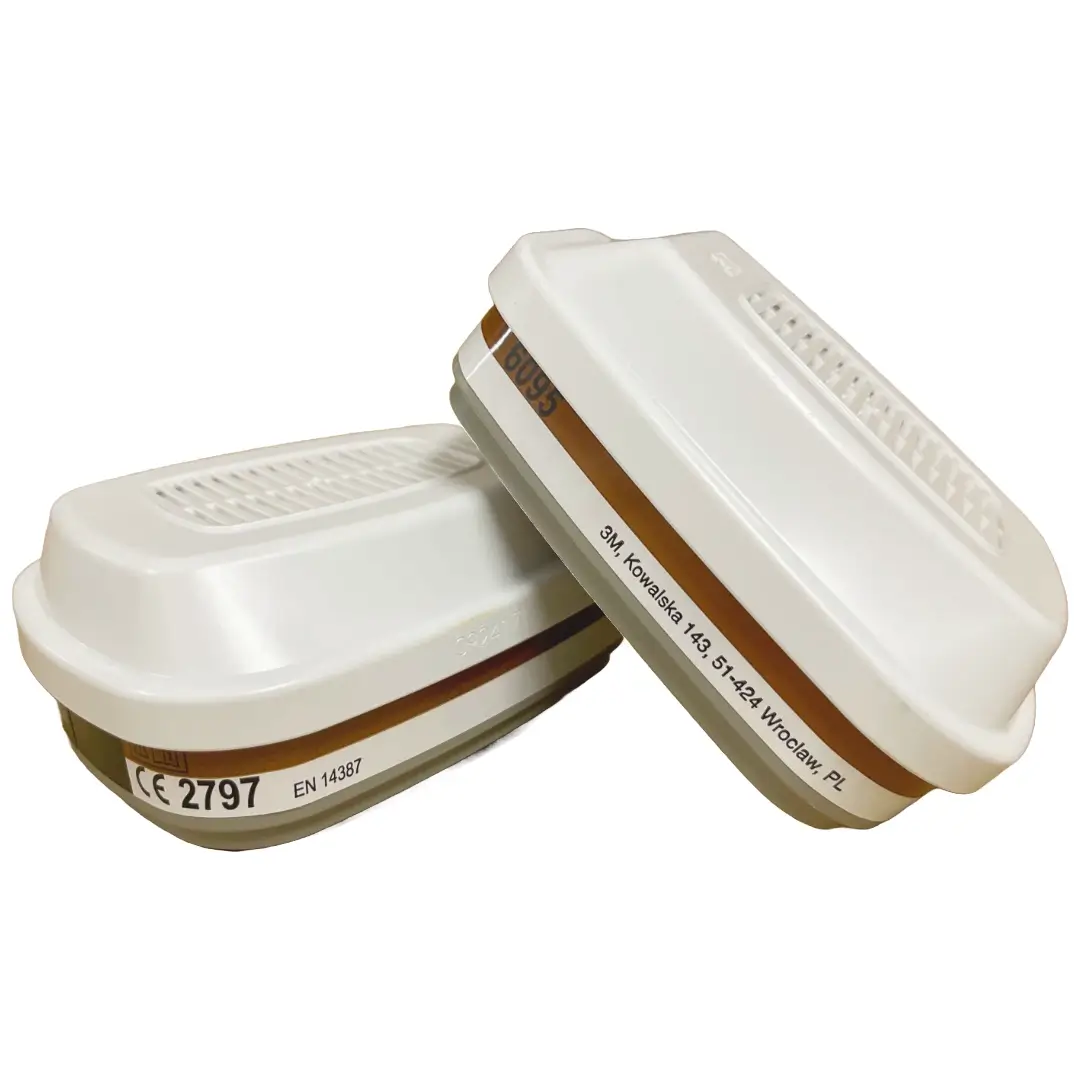
3M 6095 A2P3 R Gas, Vapour & Particulate Filters (1 Pair)
A solid choice when you need A2 organic vapour protection combined with P3 particulate filtration, useful for many paint, solvent and dusty mixed tasks (when compatible with your 3M mask).

3M D8094 Secure Click ABEK1P3 R Combination Organic Vapours Filter
Ideal if you specifically need ABEK + P3 in one combination filter, covering multiple gas families plus high-efficiency particle filtration, designed for the 3M Secure Click platform.
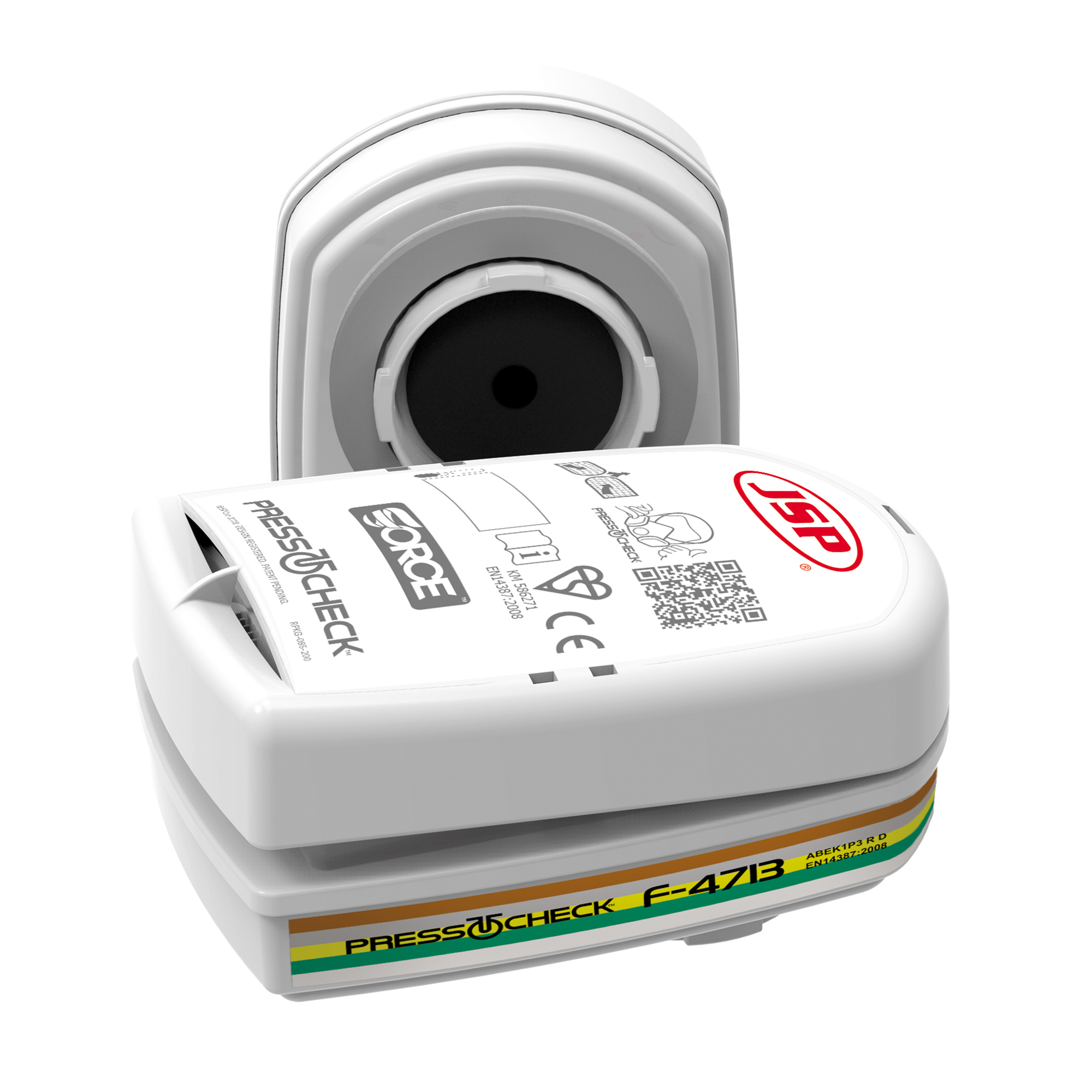
JSP Press To Check ABEK1P3 Filters – F-4713
A practical ABEK1P3 option for JSP Force series users, with PressToCheck functionality to help confirm the face seal during use (fit testing is still recommended where required).
9) How to choose correctly (simple step-by-step)
Benefits
- Reduces the risk of buying the wrong filter type
- Helps you match filters to real hazards, not just “smells bad”
- Improves comfort and performance by avoiding over-specification where unnecessary
A reliable selection process:
- Identify the hazard: dust, fume, mist, vapour, gas, or a combination.
- Check the SDS for the substance(s) and note recommended respiratory protection.
- Choose filter type: P, A, B, E, K, or combination.
- Choose capacity: class 1, 2, or 3 based on exposure duration and level.
- Confirm compatibility with your mask model and connection type.
- Ensure fit: correct size, clean-shaven seal area, and fit testing where required.
- Plan change-out: gas filters should be replaced using a schedule, not only when you can smell something.
10) Common misconceptions (and quick corrections)
“P3 filters protect against fumes, so I am covered for solvents.”
P3 covers particles, not organic solvent vapours. You likely need A2 or A2P3.“If I can’t smell it, the filter is working.”
Smell is not a reliable indicator. Some substances have poor warning properties, and odour thresholds vary.“ABEK covers everything.”
It covers several gas families, but not necessarily specialist gases (AX, Hg, NO, SX situations), and you still need the correct P rating if particles are present.


