

Reusable respirators are designed so the main facepiece (the “mask body”) can last for years, while certain components are replaced regularly to maintain protection, comfort, and hygiene. Knowing what’s consumable helps you budget properly, keep spares on site, and avoid the most common cause of poor performance, worn or incorrect parts.
📋 Key Takeaways
- The most important consumables are filters and gas/vapour cartridges, they have limited capacity and must be replaced on a schedule or when indicated.
- Many “small” parts are also consumable in practice, such as pre-filters, valve membranes, face seals, and head harnesses, because wear can cause leaks.
- In powered respirators (PAPR), pre-filters, main filters, spark arrestors, odour filters, and sometimes battery packs are the items most often replaced.
- “Consumable” does not always mean “single-use”, some parts are replaceable due to wear, contamination, or hygiene requirements.
What counts as a “consumable” in a reusable respirator?
A consumable is any component that is expected to be replaced periodically because it:
- becomes loaded with dust/aerosols,
- becomes saturated with gases/vapours,
- wears out (loss of seal, cracking, stretching),
- becomes contaminated and cannot be hygienically cleaned,
- is specified by the manufacturer as a routine replacement item.
A reusable respirator only protects you if it is complete, compatible, and correctly fitted. Never “mix and match” filters or parts across brands or systems unless the manufacturer explicitly states compatibility. If you can smell/taste contaminants, experience increased breathing resistance, or fail a seal check, stop and investigate immediately.
The main consumables in half-face and full-face respirators
1) Particulate filters (P1, P2, P3)
These capture airborne particles such as dusts, fumes, fibres, and mists. They are consumable because they progressively clog.
Typical replacement triggers:
- breathing becomes noticeably harder,
- filter is visibly dirty or damaged,
- it gets wet,
- it is contaminated (for example, biological contamination),
- manufacturer time limit is reached.
2) Gas and vapour cartridges (A, B, E, K and combination filters)
These protect against specific gases/vapours (for example A for organic vapours). They are consumable because the sorbent becomes saturated.
Typical replacement triggers:
- you detect odour/taste/irritation (often means breakthrough),
- end-of-service-life indicator (if fitted) shows change,
- the cartridge has been opened and the manufacturer’s “in-use” life is exceeded,
- you are following a workplace change-out schedule based on risk assessment.
With gas/vapour cartridges, waiting until you can smell the chemical is not a safe strategy for many substances. Best practice is to follow a documented change-out schedule based on the contaminant, concentration, and duration of exposure.
3) Pre-filters and filter retainers
Many systems use a pre-filter in front of a main particulate filter or combination filter. Pre-filters are low-cost consumables that:
- extend the life of the main filter,
- reduce running costs,
- help maintain airflow on PAPR systems.
4) Inhalation and exhalation valves (valve membranes)
Valves can harden, warp, tear, or become contaminated. Even small defects can reduce performance and comfort.
Replace if:
- the valve is curled, stiff, split, or doesn’t sit flat,
- the respirator feels leaky during a seal check,
- the mask has been heavily used in dusty, hot, or chemically aggressive environments.
5) Face seal components and gaskets
On full-face respirators especially, seals and gaskets can gradually degrade or deform.
Replace if:
- you see cracking, tackiness, or permanent deformation,
- you struggle to pass fit testing after previously passing,
- the seal has been damaged by solvents or incorrect cleaning agents.
6) Head harnesses and straps
Straps stretch and buckles wear. This is often overlooked, but poor strap tension is a common reason for poor fit.
Replace if:
- straps no longer hold tension,
- fasteners slip,
- the harness is frayed, twisted, or cracked.
7) Visors and tear-offs (full-face masks and welding/industrial headtops)
If your system includes a visor (full-face mask, welding helmet, hood, or headtop), the visor itself and its protective films are effectively consumables.
Replace if:
- visibility is reduced by scratches, pitting, overspray, or chemical haze,
- anti-fog coatings are damaged,
- protective plates are marked.
Consumables in powered air respirators (PAPR)
Powered systems introduce additional replaceable items that support airflow and protect the motor unit.
Common PAPR consumables
- Main filters (particulate or combined gas/vapour filters depending on system)
- Pre-filters
- Spark arrestors (especially for welding applications)
- Odour filters (where used as an additional stage)
- Breathing tube covers (often replaced for hygiene and wear, especially in harsh environments)
- Face seals/hood covers (certain hood systems have replaceable covers)
What about PAPR batteries?
Batteries are not “consumable” in the same way filters are, but in practice they are a wear item with a finite cycle life. If run time drops significantly or the battery fails checks, replacement is often required.
Supplied-air systems (airline respirators): what is consumable?
In air-fed systems, the “consumables” are often maintenance parts and filtration items rather than breathing filters.
Common replaceable items include:
- compressed-air filtration cartridges (where applicable),
- hoses and couplings (wear, damage, contamination),
- face seals and valve parts on the mask/headtop.
Because air quality is critical, always follow the system manufacturer’s service schedule and the relevant workplace requirements for breathing air.
Quick guide: which parts are usually consumable?
✅ Benefits
Replacing consumables on time helps you:
- maintain the correct level of protection
- reduce the risk of leaks and failed fit tests
- improve comfort and breathing effort
- extend the life of the main respirator body
- avoid downtime by keeping the right spares available
Here is a practical overview:
| Component | Half-face / Full-face | PAPR | Why it’s consumable |
|---|---|---|---|
| Particulate filters | Yes | Yes | Clogging, damage, contamination |
| Gas/vapour cartridges | Yes | Sometimes | Saturation, time limits after opening |
| Pre-filters | Often | Very common | Protects main filter, loads faster |
| Valve membranes | Yes | Sometimes (in headtop) | Wear, deformation, contamination |
| Face seals/gaskets | Sometimes | Sometimes | Wear, chemical attack, loss of seal |
| Head straps/harness | Yes | Headtop harnesses vary | Stretching, broken fasteners |
| Visor plates/tear-offs | Full-face/headtops | Common on headtops | Scratching, overspray, reduced visibility |
| Cleaning wipes | Recommended | Recommended | Hygiene and maintaining seals |
| Batteries | No | Yes | Cycle life, reduced runtime |
How often should you replace consumable respirator parts?
There is no single interval that fits all users. Replacement frequency depends on:
- the hazard (dust vs solvents vs mixed),
- concentration and duration of exposure,
- humidity and temperature,
- whether pre-filters are used,
- storage practices (sealed storage extends cartridge life after opening).
If you want a simple system for site control, many organisations keep:
- a “daily/weekly” stock (pre-filters, wipes, visor plates),
- a “monthly/quarterly” stock (main filters and cartridges),
- and a small “repairs” stock (valves, straps, seals).
Recommended products (common consumables)
Below are a few popular consumable items that suit many reusable respirator setups, especially where particulate and combination protection is needed.
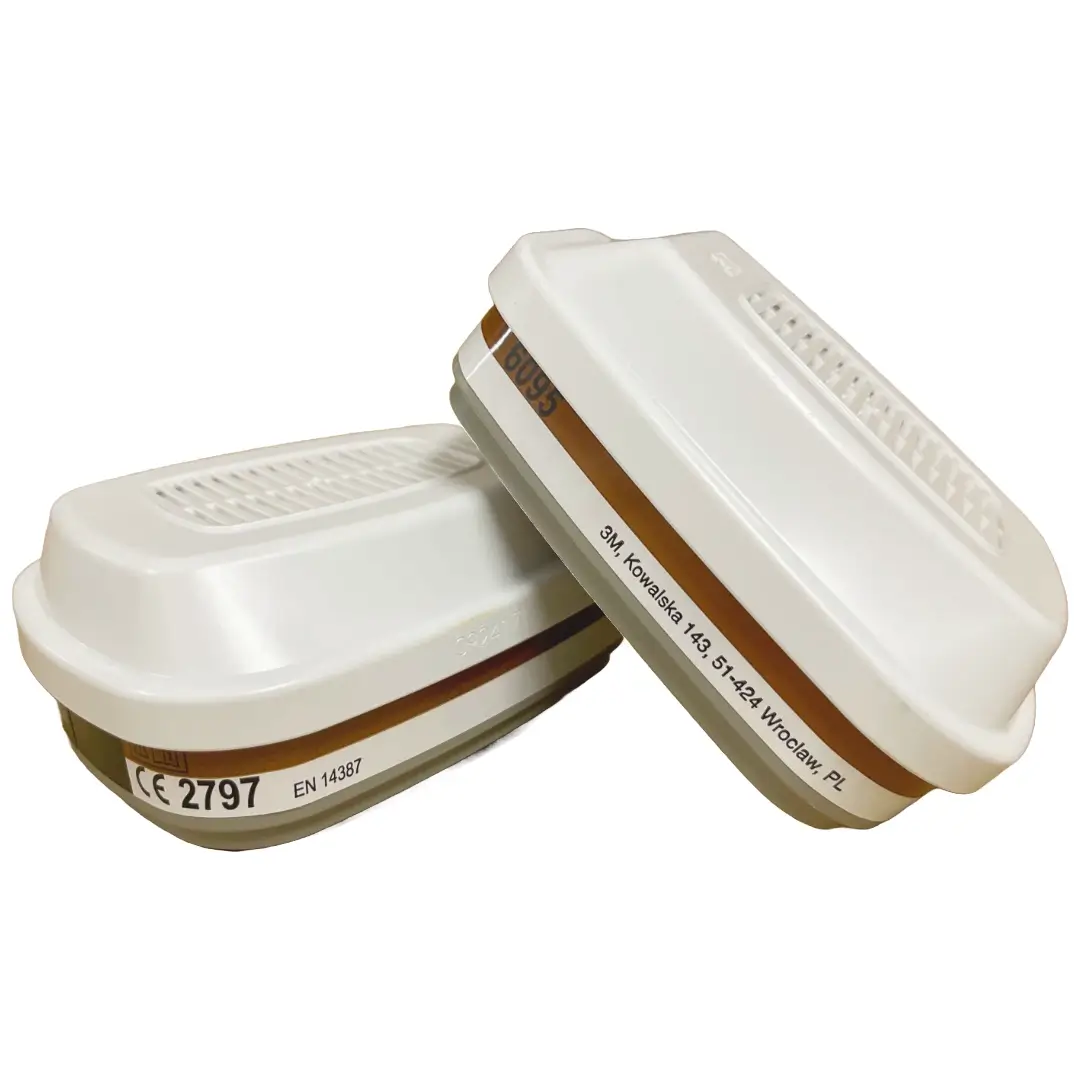
3M 6095 A2P3 R Gas, Vapour & Particulate Filters (1 Pair)
A combined filter option for compatible 3M reusable respirators, suitable when you need both organic vapour (A2) and high-efficiency particulate (P3) protection in one unit.

3M Adflo 837012 Particle Filter P SL – Box of 2 Filters
A key consumable for 3M Adflo powered respirator systems, particle filters are replaced as they load up to maintain airflow and protection.

3M 105 Face Seal Cleaning Wipes (Box of 40)
Hygiene is part of performance, cleaning wipes help maintain a good seal and reduce skin irritation, especially for shared or frequently worn respirators.
Final checks: don’t let a “small part” ruin your protection
Before each use, it’s worth doing a quick inspection:
- Confirm the correct filter type for the hazard.
- Check filters are fitted properly and not damaged.
- Inspect valves for curling, tears, or debris.
- Examine seals and straps for wear and tension.
- For visored systems, ensure clear visibility and intact visor protection.
If you tell us what you’re protecting against (dust, welding fume, solvents, mixed hazards), we can help you identify the right consumables and a sensible replacement plan.


