

Spray booths are designed to control overspray and fumes, but they are not a substitute for the right respiratory protection. The safest, most practical setup is usually a combination of effective booth airflow plus a respirator matched to your paint chemistry, application method, and exposure time.
📋 Key Takeaways
- Spray painting is rarely “dust only”, most jobs involve both particles (overspray) and vapours (solvents), so combination filtration like A2P3 is common.
- 2K paints containing isocyanates are a different risk category, many workplaces move to air-fed/supplied-air as the preferred control for spraying them.
- Booth ventilation must be balanced, good extraction without adequate make-up air can reduce capture and pull contaminants into the breathing zone.
- If you choose a tight-fitting mask, fit testing and clean shaving at the seal are essential for it to work as intended.
1) What’s in the air when you spray?
Most spray applications create a mix of hazards:
Overspray and solid particles
- Paint mist and overspray droplets that dry into fine particulate
- Sanding dust from prep work (often much finer than overspray)
- Pigments and fillers
For particulates you typically look at P3 class filtration for high efficiency.
Solvent vapours and gases
- Organic solvents (common in solvent-based paints, thinners, cleaners)
- Other vapours released during flash-off and curing
For organic solvents you typically look at A-class gas filters, commonly A2 for a higher capacity than A1.
If you are spraying 2K products that contain isocyanates, you should treat this as a high-risk task under COSHH. In many professional spray environments, the preferred control is air-fed/supplied-air respiratory protection, rather than relying only on passive cartridge filters. Always follow your paint SDS (Safety Data Sheet), risk assessment, and site procedures.
2) Understanding filter codes: A, P, and combination filters (A2P3 explained)
Filter markings can look confusing, but for spray booths the logic is straightforward.
Particulate filters (P)
- P1 / P2 / P3 relates to filtration efficiency for airborne particles.
- For paint mist and fine dust, P3 is typically the go-to choice.
Gas and vapour filters (A, B, E, K)
- A = organic vapours (many solvents used in paint systems)
- B = inorganic gases (less common in typical paint spraying)
- E = acid gases
- K = ammonia derivatives
In paint spraying, A1 or A2 is most common depending on solvent load and duration.
Combination filters
A combination like A2P3 is designed for both:
- Organic vapours (A2)
- Particles (P3)
This is often appropriate where you have solvent vapours plus overspray.
A particulate-only disposable mask (like an FFP3) can help with dust and mist, but it does not protect against solvent vapours. If you can smell solvents while wearing a particulate-only mask, that is expected because the mask is not designed to stop vapours.
3) When is a disposable FFP2/FFP3 enough in a spray booth?
Disposable respirators (FFP2/FFP3) can be suitable for non-solvent tasks, for example:
- Dry sanding (often FFP3 preferred)
- Powder handling
- Some low-hazard, non-solvent spraying tasks where SDS confirms no harmful vapours
However, for most spray painting involving solvents, a disposable particulate mask alone is not enough, because it does not address vapours.
Mask Comparison
| Feature | FFP2 | FFP3 |
|---|---|---|
| Typical use | Moderate dusts | Fine dusts, high efficiency particulate |
| Protects against solvent vapours? | No | No |
| Best for spray booth painting on its own? | Not usually | Only if SDS confirms particulate-only hazard |
4) Choosing between half mask, full face mask, PAPR, and supplied air
Your best option depends on the paint type, exposure duration, comfort, and whether eye protection is needed.
Half mask with A2P3 filters
Best for: short to moderate solvent exposures, where eye protection is handled separately (goggles or visor).
Pros: lower cost, simple.
Cons: no eye/face seal, can be uncomfortable over long periods, fit dependent.
Full face mask with A2P3 filters
Best for: solvent spraying where you also want integrated eye protection.
Pros: protects eyes from vapour irritation and overspray, higher assigned protection factor than many half masks when correctly fitted.
Cons: still cartridge dependent, heavier, fit testing required.
Powered air (PAPR) with A2P filtration
Best for: longer spray tasks, users who struggle with tight-fitting masks, and where comfort and positive airflow matter.
Pros: reduced breathing resistance, more comfortable for longer sessions, helps keep visor area clearer.
Cons: higher upfront cost, battery management, filter selection still matters.
Supplied air / air-fed systems
Best for: higher-risk spray tasks, especially where SDS and risk assessment indicate it, including many 2K/isocyanate scenarios.
Pros: does not rely on filter breakthrough for vapours, consistent clean air when properly set up.
Cons: requires correct compressor/air quality controls, hoses, and maintenance.
5) Ventilation setup basics: what to check in your spray booth
A “good respirator” cannot compensate for poor booth airflow. Aim to control exposure at source first, then PPE.
5.1 Airflow direction and capture
Common booth types:
- Downdraft: air moves from ceiling to floor extraction, often very effective for pulling overspray away from the breathing zone.
- Crossdraft: air moves end-to-end; can work well but positioning matters more.
- Semi-downdraft: compromise design, varies by booth.
What to check:
- Can you see overspray being drawn away from you, or does it hang in the air?
- Are there dead spots where mist lingers?
- Are filters loaded and reducing airflow?
5.2 Make-up air matters
Extraction must be balanced with adequate clean make-up air. If the booth is “starved” of incoming air:
- airflow becomes turbulent,
- overspray can recirculate,
- fumes can spill into adjacent areas,
- contaminants can be pulled into your breathing zone.
5.3 Filter maintenance and housekeeping
Booth performance drops fast when filters load up.
- Replace intake and extract filters on schedule.
- Keep overspray build-up under control.
- Avoid storing open solvent containers in the booth.
Benefits
- Better ventilation reduces the load on your respirator filters
- Improved finish quality, less dust nibs and contamination
- Lower odour and reduced solvent exposure for the whole workshop
6) A practical “choose your filter” guide for spray work
Use your paint SDS and your COSHH assessment as the final authority, but these are common starting points:
- Solvent-based paints, thinners, panel wipe, many cleaners: often A2P3
- Water-based paint spraying: still often needs particulate protection, and may still involve solvents during prep and cleaning
- Powder coating or heavy dust: P3 particulate (vapour protection may not be required unless other chemicals are present)
- 2K isocyanate products: frequently pushes selection toward air-fed/supplied-air depending on the task and controls
If you can smell solvent while wearing an A-class filter, stop and check: fit, correct filter type, and whether the filter is exhausted. Smell is not a reliable warning for all chemicals, but it is a clear sign something is wrong when it is present.
7) Product recommendations for spray booth respiratory protection
Below are practical options from our range, depending on your spraying workflow and the type of coatings you use.

3M™ Versaflo™ Water Based Spray Painting PAPR Bundle
A powered air solution designed around spray painting workflows. Ideal when you want more comfort for longer sessions, reduced breathing resistance, and a more robust setup than disposable masks.

3M™ Versaflo™ Powder Based Spray Painting PAPR Bundle
A strong option when your main exposure is particulate, for example powder coating related tasks, and you want powered airflow and headtop coverage.
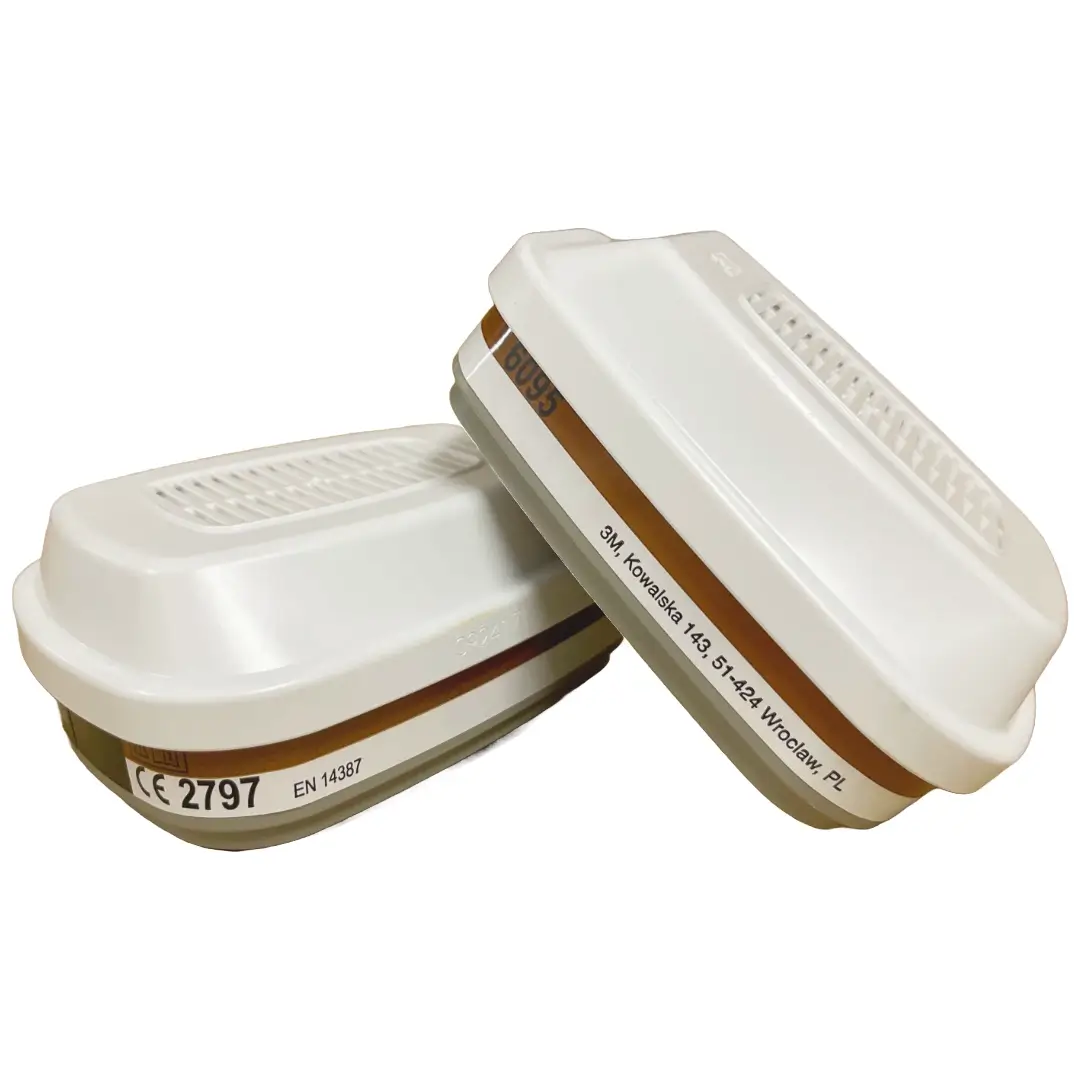
3M 6095 A2P3 R Gas, Vapour & Particulate Filters (1 Pair)
A popular A2P3 combination filter choice for many solvent-based spray tasks when used with compatible 3M reusable half or full face masks. Suitable when your assessment calls for organic vapour plus high-efficiency particulate filtration.
8) Common mistakes in spray booths (and how to avoid them)
- Using FFP3 for solvent spraying: great for particles, not for vapours.
- No fit test on tight-fitting masks: leaks make the filter rating irrelevant.
- Wrong filter class (A1 instead of A2): may reduce service life and protection margin.
- Poor booth balance: high extraction but insufficient make-up air creates turbulence and lingering mist.
- Keeping filters too long: vapour filters can load without obvious signs, follow a change-out plan.
If you are moving from occasional hobby spraying to regular work, or introducing 2K products, treat it as a trigger to review your COSHH assessment, booth performance, and whether air-fed respiratory protection is the more appropriate control.


