

Isocyanates are a common ingredient in many high-performance coatings, adhesives, foams and 2K (two-pack) products, but they are also powerful respiratory sensitisers. That means even short exposures can contribute to occupational asthma, and once sensitised, very small amounts can trigger symptoms.
Choosing the right respirator is not just about “FFP2 or FFP3”, it’s about matching the protection to the form of exposure (vapour, aerosol, mist, spray), the work method (brushing vs spraying), and your risk assessment.
📋 Key Takeaways
- Disposable FFP masks (even FFP3) are for particles, they do not protect against isocyanate vapours.
- For many isocyanate tasks you need combined protection, typically A2 + P3 (organic vapour + high-efficiency particulate).
- Spraying 2K/isocyanate coatings often requires air-fed or powered air (PAPR) under UK workplace guidance and COSHH assessment.
- A respirator only works if it fits, tight-fitting masks require face fit testing and cannot be used with facial hair in the seal area.
- Isocyanates can affect eyes and skin too, full face protection and good hygiene controls matter.
What are isocyanates, and where do you encounter them?
Isocyanates are reactive chemicals used to make durable, chemical-resistant finishes. Typical places they show up include:
- 2K automotive paints and lacquers
- Polyurethane (PU) foams and spray foam insulation
- PU varnishes, wood floor finishes, marine coatings
- Adhesives and sealants (including some construction products)
Health risks are dominated by inhalation of vapours and aerosols, plus skin exposure. Workplace exposure limits are very low for isocyanates, check the current HSE EH40 limits for your specific product and process.
This article is practical guidance, not a substitute for a COSHH assessment, manufacturer SDS instructions, and your site’s safety rules. Spraying isocyanate-containing products is a high-risk activity. If you can smell solvent, feel irritation, or experience symptoms while wearing RPE, stop and reassess immediately.
Why “FFP3” is not automatically the answer for isocyanates
A common misconception is that “FFP3 is the highest rating, so it must be fine”. The issue is that FFP ratings (EN 149) refer to particle filtration, not gas or vapour filtration.
- FFP2 / FFP3 help with dusts, mists, aerosols (particles)
- They do not filter organic vapours, which are often present with isocyanate products, especially in coatings and solvents
So, if your isocyanate exposure includes vapour, you need a respirator with the correct gas/vapour filter, not just a particulate filter.
If you are using a product that contains isocyanates but is applied by spray, you can be exposed to both:
- Organic vapours (from solvents and some volatile components)
- Fine aerosols/mist (overspray), which can stay airborne and be inhaled deeply
This is why many tasks require combination filters such as A2P3.
Respirator options for isocyanates (from lowest to highest typical protection)
The “right” solution depends on concentration, ventilation, duration, and method. Below is a practical hierarchy.
1) Disposable particulate masks (FFP2/FFP3)
Best for: Non-isocyanate dusts, or as part of very specific low-risk scenarios where the SDS confirms only particulate hazard.
Not ideal for: Most isocyanate jobs, especially where vapours are present.
2) Reusable half mask + combination filters (A2P3)
Best for: Some non-spraying tasks, mixing/decanting (depending on ventilation and SDS), sanding cured coatings (typically P3 only, if fully cured and no vapours).
Limitations: No eye protection; relies on a strong face seal; still may be inappropriate for spraying.
3) Reusable full face mask + combination filters (A2P3)
Best for: Higher protection than half masks, adds eye/face protection.
Limitations: Still a negative-pressure tight-fitting mask, requires fit testing; may not be preferred for spray applications with high airborne concentrations.
4) Powered Air Purifying Respirator (PAPR) with appropriate filters
Best for: Improved comfort, reduced inward leakage in many real-world uses, good option for longer wear periods. Common in coatings, manufacturing, maintenance.
Limitations: Must be correctly configured with the right filters and headtop, batteries maintained, and still must match the hazard.
5) Supplied-air (air-fed) respirators
Best for: High-risk spraying and situations where cartridge filtration is not suitable or cannot be reliably managed.
Limitations: Requires a compatible clean air supply and system management.
What filter type do you need for isocyanates?
In the UK and EU, gas and vapour filters are classified under EN 14387. For many isocyanate-related tasks, you will see recommendations such as:
- A2: organic vapours (solvent-type vapours) capacity class 2
- P3: high-efficiency particulate filtration (for aerosols/mists)
So the common “starting point” people look for is A2P3.
Isocyanates themselves can be present in aerosol form during spraying, and many isocyanate-containing products also release organic solvent vapours. This is why A2P3 is a frequent requirement, but always confirm against your SDS and COSHH.
Spraying isocyanates (2K paint, spray foam): what is typically recommended?
Spraying usually creates the highest airborne exposures because it generates a cloud of fine droplets. In many professional settings, air-fed or powered air systems are used because they provide higher, more reliable protection for spray environments when correctly selected and maintained.
If you are spraying isocyanate-containing products, do not assume a half mask with filters is adequate. Spraying often demands higher assigned protection and better control of inward leakage. Always follow the product SDS and your COSHH assessment, and consider air-fed or PAPR solutions.
Mask Comparison
| Option | What it protects against | Typical use case | Key limitations |
|---|---|---|---|
| FFP3 disposable (EN 149) | Particles only | Dusts, non-isocyanate particulates, sanding (if no vapours) | No vapour protection, fit critical |
| Half mask + A2P3 | Organic vapours + particles | Some mixing/handling tasks with good ventilation | No eye protection, fit test required |
| Full face mask + A2P3 | Organic vapours + particles + eye protection | Higher-risk handling tasks, better face/eye coverage | Heavier, fit test required |
| PAPR with A2P filter | Organic vapours + particles, powered airflow | Longer wear, improved comfort, many industrial tasks | System cost, maintenance, correct configuration |
| Supplied-air (air-fed) | Clean air supply to user | Spraying and higher-risk applications | Air supply management required |
✅ Benefits of upgrading from disposable masks for isocyanate work
✅ Better matched protection (vapours + particulates) when using the correct filter
✅ Reusable facepieces can deliver a more consistent seal when fit tested
✅ Full face and PAPR options can improve eye protection and comfort
✅ Better suitability for longer tasks and more demanding environments
Product recommendations (popular solutions for isocyanate-related work)
Below are a few relevant options from our range. Your final choice should be driven by your SDS/COSHH assessment, task type (especially spraying), and fit testing requirements.
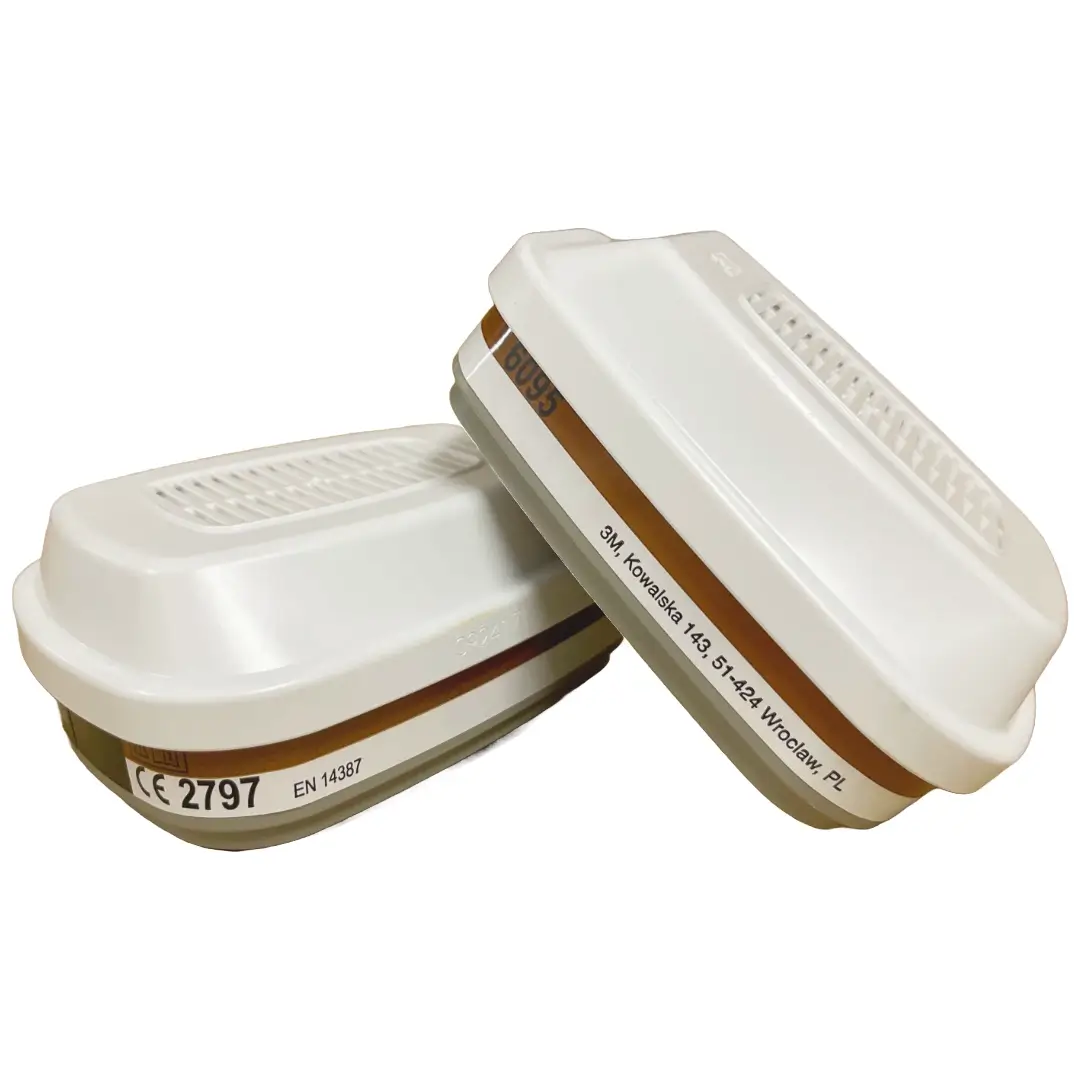
3M 6095 A2P3 R Gas, Vapour & Particulate Filters (1 Pair)
A practical A2P3 combination filter option for compatible 3M reusable respirators, useful where you need both organic vapour and P3 particulate protection (task dependent).

GVS Elipse Full Face Mask A2P3 with Replaceable Filters – One Size – Organic Vapour, Gas & Particulate Protection
A full face reusable option with A2P3 capability, adding eye and face protection compared to half masks, which can be helpful for splash risk and general exposure control.

CleanSpace WORK Kit: Advanced Powered Air-Purifying Respirator
A compact PAPR solution that can be a strong step-up for comfort and real-world wearability on longer jobs. Ideal when your assessment indicates powered air is preferable to negative-pressure masks.
Practical selection checklist (what we need to know to advise correctly)
If you are unsure what to choose, these questions quickly narrow down the right class of RPE:
- Are you spraying? (Yes often points toward PAPR or supplied-air)
- What does the SDS say under respiratory protection?
- Is exposure mainly vapour, mist/aerosol, or both?
- Is there local exhaust ventilation or a spray booth?
- Do you need eye protection integrated (full face or hood)?
- Can the wearer pass a face fit test (tight-fitting masks)?
- How long is the task, and will heat or fatigue affect compliance?
- How will you manage filter change schedules and storage?
For tight-fitting masks (half and full face), facial hair in the seal area prevents a reliable fit. If shaving is not possible, you may need a hood-based PAPR or a suitable supplied-air option as determined by your assessment.
Final word: control measures matter beyond the mask
Respiratory protection is only one layer. For isocyanates, good practice typically also includes:
- Using products in controlled areas (spray booth, extraction)
- Training in correct donning, doffing, and checks
- Gloves and coveralls suitable for chemical exposure
- Good housekeeping to prevent secondary exposure from contaminated surfaces
- Proper storage of masks and filters to reduce contamination and premature filter loading


