
Choosing respiratory protection usually starts with a simple question, “Do I need an FFP3, or is an FFP2 enough?” Then the job changes, wear time increases, glasses fog up, fit tests become a headache, and suddenly PAPR (Powered Air Purifying Respirator) systems enter the conversation.
This guide explains the practical differences between standard negative-pressure respirators (disposable FFP masks and reusable half or full face masks) and PAPR systems, plus clear signs it may be time to upgrade.
📋 Key Takeaways
- Standard respirators rely on a tight face seal, so fit testing, facial hair, and movement matter a lot.
- PAPR systems use a blower to deliver filtered air, typically improving comfort and reducing breathing resistance during long tasks.
- Upgrading to PAPR often makes sense for long wear times, high dust/fume loads, or repeated fit test failures.
- Your decision should be driven by risk assessment (COSHH), required protection factor, and real-world wearability, not just filter class.
What counts as “standard” respiratory protection?
In day-to-day UK workplaces, “standard respirator” usually means:
- Disposable filtering facepiece masks: FFP2, FFP3 (EN 149)
- Reusable half masks with replaceable filters (often P3 particulate, or gas and vapour combinations)
- Reusable full face masks with replaceable filters (higher protection, plus eye/face sealing)
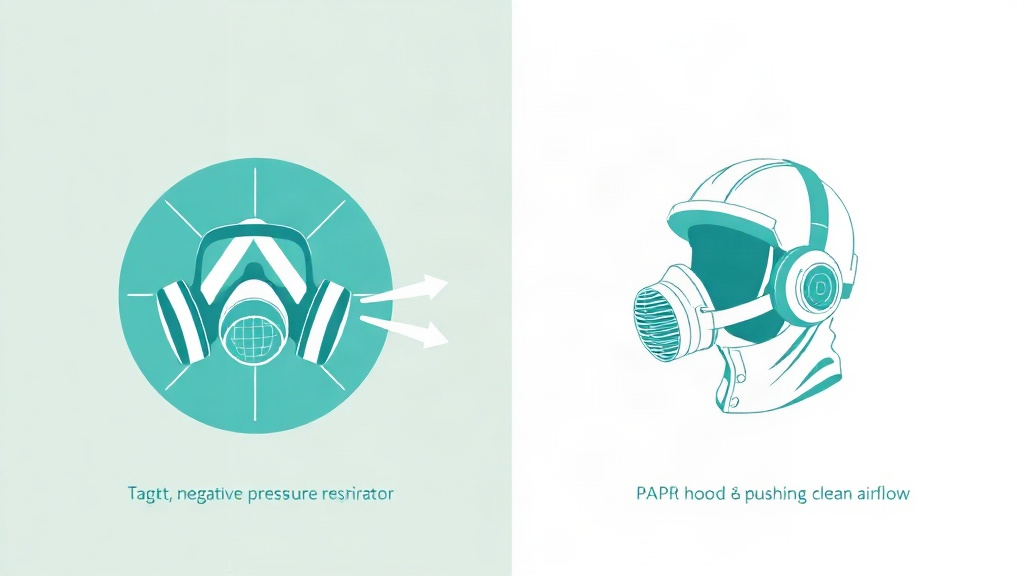
All of these are typically negative-pressure devices, meaning your lungs pull air through the filter. That is why breathing resistance increases as filters load up.
What is a PAPR?
A PAPR is a powered system that uses a battery blower unit (turbo) to pull air through filters and push clean air to a headtop (hood, helmet, or face shield) via a breathing tube.
Depending on the headtop and system type, PAPRs can provide:
- Higher comfort for long shifts
- Reduced fogging
- A more forgiving fit experience (especially with loose-fitting hoods)
Some PAPR headtops are loose-fitting hoods that do not require a tight face seal in the same way as an FFP3. This can be a major advantage for workers who cannot achieve reliable fit with tight-fitting masks.
PAPR vs standard respirator: the real-world differences
Mask Comparison
| Feature | Standard respirator (FFP2/FFP3, half mask, full face) | PAPR (powered air) |
|---|---|---|
| How air moves | You pull air through the filter (negative pressure) | Blower delivers filtered air (positive pressure inside headtop) |
| Comfort over long wear | Can become hot, humid, harder to breathe | Typically cooler, lower breathing resistance |
| Fit dependence | High, leaks reduce protection significantly | Varies, loose hoods can be more forgiving |
| Facial hair impact | Often incompatible for tight-fitting types | Loose-fitting hoods can help in some cases |
| Communication | Can be muffled, depends on mask | Often better visibility, depends on headtop and airflow noise |
| Upfront cost | Lower | Higher |
| Ongoing maintenance | Low to moderate | Moderate, filters, battery care, cleaning, inspections |
| Best for | Short to moderate tasks, lower burden, mobile work | Long duration work, higher burdens, comfort-critical roles |
Pros and cons of standard respirators
Benefits
- Lower initial cost
- Simple to issue and replace
- Widely used across construction, manufacturing, facilities, healthcare, and DIY
- Easy to keep spares on hand
Main drawbacks
- Comfort can degrade quickly with heat, humidity, and long wear times
- Tight-fitting masks require correct size and donning technique
- Facial hair and face shape can prevent an effective seal
- Breathing resistance rises as particulate filters load
Pros and cons of PAPR
Benefits
- Reduced breathing resistance, helpful for long or physically demanding tasks
- Often less fogging due to airflow across the visor area
- Can be more wearable for users who struggle with tight-fitting masks
- Many headtops add integrated face and eye protection
Main drawbacks
- Higher purchase cost
- Batteries must be charged and managed
- More components to clean, store, and inspect (turbo, filters, tube, headtop)
- Not always ideal in tight spaces or snag-risk environments if hoses are exposed
A PAPR is not automatically “better” for every hazard. The correct choice depends on the contaminant type (dust, fumes, gases, oxygen deficiency), exposure levels, and the protection factor required by your risk assessment. PAPRs are not suitable for oxygen-deficient atmospheres.
When should you upgrade to a PAPR?
Here are the most common triggers we hear from customers who move from standard respirators to powered air.
1) You are wearing respiratory protection for hours, not minutes
If staff wear an FFP3 for most of a shift, discomfort leads to:
- frequent touching and adjustments
- poor compliance
- increased leak risk
A PAPR often pays back in productivity because workers keep it on, correctly, for longer.
2) You cannot get consistent fit test results
If you use tight-fitting RPE (FFP3, half mask, full face) in the workplace, you may need fit testing as part of RPE management. Repeated failures or borderline results, especially across a workforce, can make PAPR systems a practical alternative, particularly with loose-fitting headtops.
3) The environment is hot, humid, or causes fogging
High humidity, physical work, or eye protection plus a tight-fitting mask is a common fogging recipe. PAPRs can improve comfort by maintaining airflow in the headtop.
4) Your filters clog quickly
High dust loads in sanding, cutting, grinding, and certain cleanup tasks can rapidly load filters. When breathing resistance becomes a limiting factor, powered air can be a major upgrade.
5) You need integrated face and eye protection
Many PAPR headtops function as a combined respiratory and face/eye protective solution, simplifying PPE selection for tasks with splash, dust, or impact risks.
Which is better for common tasks?
Workshop dust, sanding, and general particulate
- Short duration: FFP2 or FFP3 can be suitable if selected via risk assessment.
- Long duration or heavy dust: PAPR improves comfort and wear time.
Welding fumes
Welding fumes can be hazardous and persistent. Many welders upgrade to powered systems because they reduce fatigue and improve usability across a full day.
Paint spraying and solvent vapours
This may require gas and vapour filtration, not just particulate. PAPR can work well if paired with the correct filters for the solvent, but selection must be based on the substances used.
Asbestos and other high-risk dusts
Specialist procedures and RPE selection apply. In these cases, many teams use higher-grade systems, rigorous RPE management, and strict compliance controls.
Practical buying checklist before upgrading
Benefits
- Confirm the hazard type: particulates vs gases/vapours vs mixed
- Check whether you need a tight-fitting solution, or whether a loose-fitting hood is acceptable for your work and required protection
- Consider wear time, heat, communication needs, and compatibility with other PPE
- Plan your maintenance routine: charging, cleaning, filter changes, storage
- Ensure selection fits your COSHH assessment and workplace RPE programme
Recommended products from The Face Mask Store UK
Below are proven options customers typically consider when moving from standard masks to powered air.

3M Versaflo TR-315E+ Powered Air Respirator Starter Kit
A robust entry point into powered air, ideal when you need improved comfort and reduced breathing resistance compared with standard respirators. Suitable as the core of a PAPR setup that can be paired with compatible headtops and filters for the job.

3M Versaflo M-206 Faceshield with Comfort Faceseal
A comfortable faceshield headtop option for Versaflo systems, helpful if you want integrated face protection with powered airflow to reduce heat and fogging during longer tasks.

3M Aura 9320D+ Unvalved FFP2 Disposable Respirator
A high-quality disposable option for shorter or lower-burden tasks where FFP2 is appropriate. A good baseline reference point when comparing comfort and performance against upgrading to PAPR for longer wear times.
Final thoughts: upgrade when wearability becomes your weak link
Standard respirators can be the right solution for many jobs, but in real workplaces, the “best” respirator is often the one people can and will wear correctly for the full exposure period. When comfort, fit reliability, and long-duration use become limiting factors, a PAPR upgrade can be a practical step forward.


