
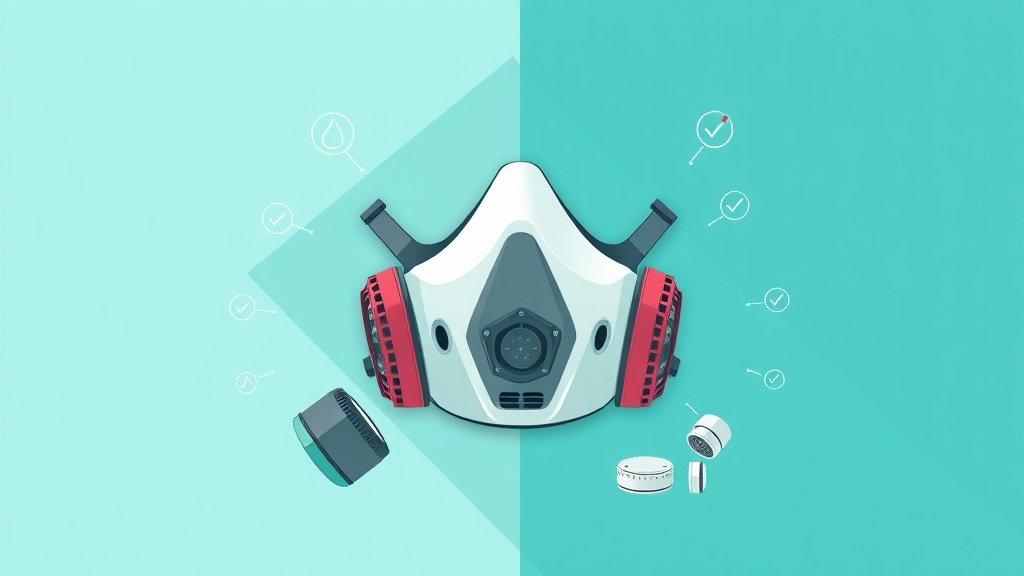
Reusable half mask respirators are designed for repeated use, but only if they are cleaned correctly and checked regularly. Poor cleaning can warp the face seal, damage valves, or contaminate filters, which can reduce protection and comfort.
📋 Key Takeaways
- Always remove filters before cleaning, most filters must never be washed or wetted.
- Clean the facepiece with mild detergent and warm water, then air-dry away from heat and sunlight.
- Inspect valves, straps, and the sealing surface every time you clean or before you use the mask.
- Replace filters based on use conditions, breathing resistance, damage, or manufacturer guidance, not just time.
- Store the respirator clean and dry in a case or sealed container to protect the seal from distortion and contamination.
Why cleaning and maintenance matters
A half mask respirator works because it forms a tight seal to your face and routes inhaled air through the correct filters. Dirt, skin oils, overspray, and dust can:
- Reduce the quality of the face seal
- Affect exhalation and inhalation valves, causing leaks or moisture build-up
- Shorten filter life by clogging pre-filter surfaces
- Create hygiene issues, especially if shared between users (generally not recommended unless the manufacturer allows it and you have a controlled cleaning process)
This guide is general best practice. Always follow your respirator manufacturer’s Instructions for Use (IFU), especially for approved cleaning agents and disassembly. Never use a respirator in an atmosphere that is oxygen-deficient or immediately dangerous to life or health (IDLH) unless it is specifically designed for that purpose.
Before you start: identify what type of filters you have
Half masks commonly use:
- Particulate filters (P2/P3) for dusts, mists, and fumes (example: sanding, concrete dust)
- Gas and vapour filters (A1/A2, ABEK, etc.) for solvents and chemicals (example: painting with solvent-based products)
- Combination filters (gas/vapour + particulate)
Different filters have different limitations, but a key rule is the same for most systems:
Do not wash, soak, or spray filters with disinfectant unless the manufacturer explicitly says you can. Wetting many filters can increase breathing resistance, reduce performance, or damage the media.
Step-by-step: how to clean a reusable half mask respirator
1) Wash your hands and prepare a clean area
- Work on a clean bench or surface
- If the mask is contaminated with hazardous dusts or chemicals, follow your workplace COSHH procedures and the product Safety Data Sheet (SDS)
2) Remove the filters and any cartridges
- Detach filters carefully to avoid knocking dust into the mask body
- Place filters somewhere clean and dry (or dispose of them if they are due for replacement)
3) Inspect the respirator before cleaning
Check for:
- Cracks, distortion, or stickiness on the face seal
- Stretched, frayed, or slipping straps
- Valve covers seated correctly
- Exhalation valve condition (flat, flexible, no tears)
- Dirt trapped around the valve seat or filter connectors
If anything looks damaged, replace the part or the mask, do not rely on cleaning alone.
4) Clean the facepiece
For many half masks, a safe general method is:
- Use warm water (not hot) and mild detergent
- Wipe with a soft cloth or use a soft brush for crevices
- Pay attention to the sealing surface and valve areas
Avoid:
- Solvents (including thinners), strong alcohols, bleach, or abrasive cleaners unless the manufacturer approves them
- High temperatures, which can warp thermoplastics and affect silicone or rubber seals
5) Disinfect (only if needed and approved)
If you need disinfection for hygiene reasons:
- Use manufacturer-approved disinfectants or purpose-made respirator cleaning wipes
- Ensure the wipe is suitable for face seals and does not leave residues that irritate skin
6) Rinse thoroughly
Rinse off detergent residue with clean water. Residue can:
- Cause skin irritation
- Attract dust
- Interfere with valve function over time
7) Air dry correctly
- Air dry in a clean area
- Keep away from direct sunlight, radiators, ovens, or hot vehicles
- Ensure valves and internal areas are fully dry before reassembly
8) Reassemble and perform a quick user seal check
Once dry:
- Refit filters securely
- Perform a positive and negative pressure seal check (method varies by model, follow your IFU)
What not to do (common mistakes)
Benefits
- Extends respirator service life and comfort
- Reduces odours and hygiene issues
- Helps maintain a reliable face seal
- Prevents valve sticking and moisture build-up
- Avoids accidental filter damage and wasted replacements
Common mistakes to avoid:
- Washing filters or spraying them with disinfectant
- Using boiling water or a dishwasher
- Using solvent wipes that can harden or swell the seal
- Storing the mask loose in a toolbox where the seal gets crushed
- Continuing to use a respirator with a warped seal or damaged valve because it “still feels OK”
How often should you clean and inspect your half mask?
Cleaning frequency depends on use. As a practical baseline:
- After each shift/task if used in dusty, dirty, or sweaty conditions (construction, sanding, demolition, heavy shop work)
- After each use if used for strong odours or chemicals (painting, solvents), and only using approved methods
- Weekly to monthly for light, occasional DIY use, but still inspect before every wear
Quick maintenance schedule (simple rule of thumb)
| Task | When to do it |
|---|---|
| Visual inspection (seal, straps, valves) | Before every use |
| Clean facepiece | After heavy use, or when visibly dirty |
| Check valve function (look for sticking/warping) | After cleaning and weekly during regular use |
| Replace filters | When damaged, clogged, hard to breathe through, wet, contaminated, or per manufacturer guidance |
When should you replace filters?
Replace filters immediately if:
- They get wet (common with heavy sweat, rain, or wash accidents)
- They are physically damaged or clogged with dust/paint
- You notice increased breathing resistance
- You detect odours/tastes while using suitable gas/vapour filtration (this can indicate breakthrough, poor fit, wrong filter type, or expired filter)
If you can smell solvent or chemical odours while wearing a correctly fitted respirator with the correct gas/vapour filters, leave the area and reassess. It may be filter breakthrough, incorrect filter selection, poor fit, or conditions outside the filter’s capability.
Storage tips that protect the seal (and your filters)
Correct storage is part of maintenance:
- Store the respirator clean and completely dry
- Keep it away from dust, sunlight, extreme heat, and chemicals
- Do not store it under weight or where the face seal is compressed
- Keep filters sealed if possible, especially gas/vapour filters, to reduce exposure to ambient contaminants when not in use
Helpful maintenance products from The Face Mask Store UK
A few small accessories can make it much easier to keep a half mask hygienic and in good condition.

3M 105 Face Seal Cleaning Wipes (Box of 40)
Convenient wipes for cleaning the face seal area between tasks and as part of a routine cleaning process, ideal when you cannot access soap and water immediately.

3M Carry Case 106 for Half Mask Respirators
A rigid carry case helps prevent the face seal being crushed in a bag or toolbox, and keeps the respirator cleaner between uses.

Ansell TouchNTuff 92-600 Premium Disposable Nitrile Gloves Powder-Free (Box of 100 Gloves)
Disposable nitrile gloves are useful when handling used filters or contaminated facepieces, and help prevent transferring oils and dirt back onto the seal after cleaning.
Troubleshooting: quick fixes for common issues
The mask smells bad even after cleaning
- Check that you are cleaning around the valve areas and under any harness attachments
- Ensure the mask is fully dry before storage
- Consider whether filters are the source, many odours live in filters, not the facepiece
The mask is harder to breathe through
- Likely filter loading or clogging, replace particulate filters
- For gas/vapour filters, check you have the correct type for the hazard, and confirm they are in-date and correctly fitted
The seal feels “different” after cleaning
- Check for warping from hot water or heat drying
- Inspect for swelling or tackiness if strong chemicals were used
- If the seal is distorted, the respirator may no longer fit reliably
Final reminder: fit still matters
Even a perfectly cleaned respirator will not protect you if it does not fit your face. If you rely on a half mask for workplace hazards, you should have the correct fit testing and follow your site’s RPE programme (HSE guidance).


