

Breathing in other people’s cigarette smoke can be unpleasant at best, and for some people (asthma, COPD, pregnancy, children, or anyone sensitive to irritants) it can trigger coughing, wheezing, headaches, and sore eyes or throat. A common question we get is whether wearing a face mask actually helps with passive smoke exposure.
The helpful answer is: some masks can reduce part of what you breathe in, but not all masks, and not all parts of smoke are the same.
📋 Key Takeaways
- Disposable FFP2 and FFP3 masks can reduce smoke particles, but they do not reliably protect against smoke gases and vapours.
- Smoke is a mix of particles plus gases, so the best “mask solution” usually needs combined gas + particulate filtration (for example A2P3 on a reusable respirator).
- If you can smell smoke strongly through a mask, that is typically the gas/vapour component, which many masks do not stop.
- The most effective protection is still avoiding exposure, increasing distance, and improving ventilation. A mask is a backup layer, not a perfect fix.
What counts as “passive smoke” exposure?
Passive smoke exposure normally means second-hand smoke, the smoke exhaled by a smoker plus smoke from the burning cigarette. (You may also hear “third-hand smoke”, which is residue that settles on clothing, hair, furniture, and car interiors.)
From a respiratory protection point of view, smoke contains two main hazard types:
- Particles (aerosols): tiny solid and liquid particles that can irritate airways.
- Gases and vapours: the “smell” and many chemical irritants travel in this form.
That difference matters, because different masks and filters target different hazard types.
Why some masks help, and others do not
Particulate filtration: where FFP2 and FFP3 can help
FFP2 and FFP3 respirators (tight-fitting filtering facepiece masks) are designed to filter airborne particles when they fit correctly. Smoke contains a lot of particle matter, so a well-fitted respirator can reduce what you inhale.
In practice, for brief exposure outdoors (walking past a smoker, waiting at a bus stop), a quality FFP2 or FFP3 can reduce irritation for many wearers.
Gas and vapour filtration: the part most disposable masks miss
The sharp “smoke smell” is largely driven by gases and vapours. Standard FFP2 and FFP3 respirators are not designed to remove gases/vapours.
Some disposable masks add a carbon layer that can reduce nuisance odours. This can make smoke more tolerable, but it is not the same as a properly rated gas filter on a reusable respirator.
If your main complaint is smell and sting rather than visible haze, you are often reacting to the gas/vapour component, not just particles. That is why an FFP3 can feel “not that effective” in a smoky environment even though it is filtering particles well.
Which type of mask is best for smoke exposure?
Mask Comparison
| Option | What it helps with | What it does not help with | Best for |
|---|---|---|---|
| Surgical mask (Type IIR) | Droplets, splash resistance | Most fine particles, most gases/vapours | Not recommended for smoke exposure |
| FFP2 respirator | Many airborne particles | Smoke gases/vapours | Occasional brief outdoor exposure |
| FFP3 respirator | More particle filtration than FFP2 | Smoke gases/vapours | Higher particle reduction, shorter exposures |
| FFP2/FFP3 with carbon layer | Particles plus some nuisance odour reduction | Not a substitute for rated gas filtration | Comfort improvement where smell is the issue |
| Reusable respirator with A2P3 filters | Particles plus organic vapours (better for smoke odour and irritants) | Not a cure-all, still depends on fit and correct filter choice | Regular exposure, strong odours, higher sensitivity |
What to look for if you want a mask for passive smoke
1) Fit (it matters more than the label)
Even the best filter media performs poorly if air leaks around the seal. Look for:
- Head straps rather than loose ear loops (often easier to seal for respirators)
- A strong nose clip and a mask shape that suits your face
- Minimal gaps at cheeks and under the chin
2) Choose filtration based on your main issue
- If you mainly want to reduce particle irritation, choose FFP2 or FFP3.
- If you mainly want to reduce smell and vapour irritation, consider a reusable respirator with A-class gas filtration (for example A2) combined with particulate (P3).
3) Understand what “carbon” does (and does not do)
Carbon layers can reduce odours and some vapours at low levels, but:
- They are typically nuisance odour focused, not full workplace-style gas protection.
- Carbon becomes less effective as it saturates, and saturation can be hard to detect.
Situations people ask about most
“I’m exposed to smoke outside, can a mask help?”
Often yes, especially if exposure is brief and your main trigger is particulate irritation. An FFP2 or FFP3 can reduce what you breathe in, provided it fits well.
“I’m exposed to smoke indoors (shared building, car, or home), can a mask solve it?”
A mask may reduce exposure, but it is not a complete solution indoors where smoke concentration can build up. The most effective controls are:
- Eliminating the source (smoke-free rules)
- Ventilation and air cleaning
- Sealing air pathways between dwellings (where applicable)
If you are exposed to significant smoke indoors (especially in a car or a small room), do not treat a mask as “safe enough”. If you develop chest pain, severe breathlessness, dizziness, or symptoms that do not settle, seek medical advice promptly.
Recommended products from The Face Mask Store UK
Below are options that match the two most common needs: reducing smoke particles (FFP3) and reducing both particles plus smoke odours (A2P3 reusable).
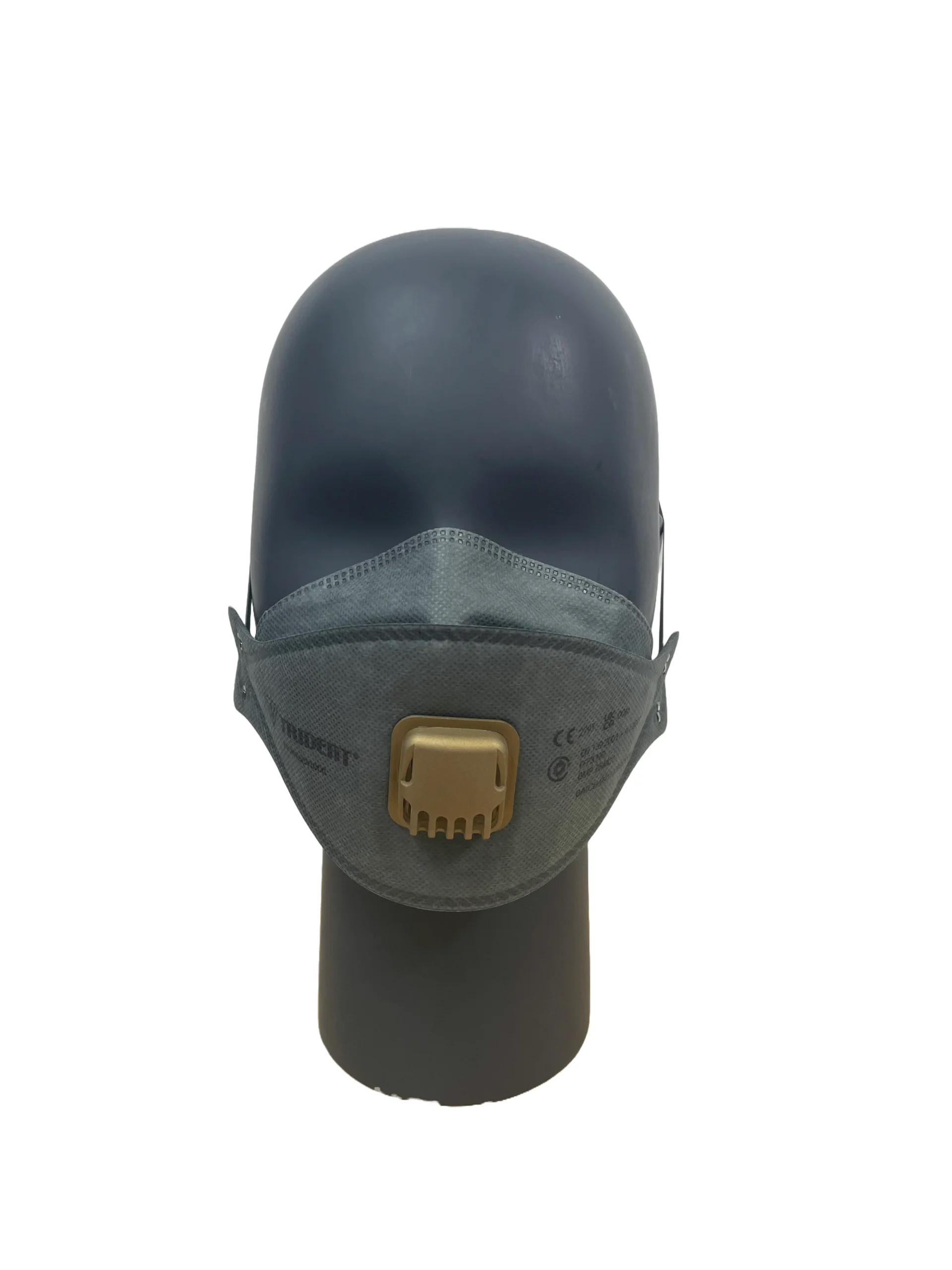
Trident FFP3 Carbon Valved Mask
A practical choice for people who want strong particle filtration (FFP3) plus a carbon layer for nuisance odours, which can make brief passive smoke exposure more tolerable.

3M 4279+ Half Mask ABEKP3
A reusable half mask designed for combined gas/vapour plus particulate filtration (ABEKP3). This is often the better route if your main problem is smoke smell and vapour irritation, not just particles.

GVS Elipse Full Face Mask A2P3 with Replaceable Filters
Full face coverage with A2P3 filtration helps with both particles and organic vapours, and also protects the eyes from irritant smoke. A strong option for higher sensitivity or more regular exposure scenarios.
Practical tips to reduce passive smoke exposure (with or without a mask)
Benefits
- Increase distance, even a few metres can make a big difference outdoors
- Stand upwind where possible
- Avoid choke points like doorways, bus shelters, and outdoor seating areas with poor airflow
- Change clothing after heavy exposure (reduces third-hand residue transfer)
- If exposure is at home, focus on source control and ventilation, masks are a short-term workaround
FAQs
Does an N95 help with cigarette smoke?
N95 is broadly similar to FFP2 in particle filtration performance. Like FFP2, it can reduce particles, but it will not reliably filter smoke gases/vapours.
If I can still smell smoke, does that mean the mask is failing?
Not necessarily. It may mean the mask is working on particles, but the vapours are passing through, or that you have face seal leakage. If smell is your main problem, consider A2P3 style filtration.
Is FFP3 always better than FFP2 for smoke?
For particles, yes, FFP3 generally provides higher filtration. For smoke odour, neither is a complete solution unless you move to a product designed for gas/vapour filtration.


