

It is a common question when you own a reusable respirator, or you are buying your first set of filters, can one filter “do it all” across different tasks?
In many cases you can use the same type of filter for different jobs, but only if the hazard type, required protection level, and filter compatibility all match. Where DIY and industrial use really differ is the duty of care, documentation, and how strictly you must follow formal risk assessments and RPE (respiratory protective equipment) programmes.
📋 Key Takeaways
- You can reuse the same filter across jobs only when the hazard type is the same, for example particulate dust across multiple sanding tasks.
- The filter must be compatible with your mask system (connection type and manufacturer approvals), filters are not universal.
- “More protection” is not always the right answer, you must also choose the right filter class, for example A2 for organic vapours, P3 for fine particulates.
- Industrial use usually requires COSHH-based risk assessment, face fit testing, and RPE management, DIY does not remove the safety need, but the legal framework differs.
- Some hazards (asbestos, isocyanates, unknown atmospheres) often require specialist RPE, not just “a better filter”.
1) Start with the real question: “Same filter” means three different things
Before deciding if you can use the same filter, clarify what you mean:
A) Same filter model (literally the same cartridge)
You might use the same cartridge for multiple sessions, or across similar tasks, as long as:
- the filter is still within service life (not saturated, damaged, clogged, or past any stated limits),
- it has been stored correctly (sealed, clean, dry),
- and it has not been exposed to contaminants that make reuse unsafe.
B) Same filter type/class (for example P3 for dust)
This is usually the sensible approach. You may keep a set of particulate filters for dust jobs, and a set of gas/vapour or combination filters for solvent jobs.
C) Same filter across different hazards (dust today, solvents tomorrow)
Sometimes possible with a combination filter (gas/vapour + particulate), but not always appropriate, and often not cost-effective.
2) Filter selection basics: particulate vs gas/vapour (and why it matters)
Particulate filters (P1, P2, P3)
These are for solid and liquid aerosols, such as:
- sanding dust (wood, plaster, filler),
- concrete or masonry dust (often silica risk),
- metal fumes (for example welding fume),
- nuisance dusts and fine particles.
Gas and vapour filters (A, B, E, K etc)
These are for molecules in the air, such as:
- solvent vapours from paints, thinners, adhesives (often “A” class),
- acid gases (E class),
- ammonia (K class),
- and other specific gases depending on the filter code.
Combination filters (for example A2P3)
Many real jobs create both vapours and particles, for example spray painting creates overspray particulate plus solvent vapour.
A particulate filter does not protect against solvent vapours, and a gas/vapour filter alone does not protect against dust or mist. Choosing the wrong filter type can leave you effectively unprotected even if the mask “feels” sealed.
3) DIY vs Industrial: what changes (and what does not)
DIY use (home projects)
DIY users often choose filters based on the job and comfort. That is fine, but you should still:
- identify what you are breathing (dust, fumes, vapours, mist),
- choose an appropriate filter class (not just “a mask that looks serious”),
- ensure a good face seal (facial hair and poor fit are common DIY failure points),
- store filters properly so they are not “used up” while sitting in the workshop.
Industrial use (workplace tasks)
In the workplace, the same filter decision is normally driven by:
- COSHH assessment (what substances, what exposure levels),
- required Assigned Protection Factor and suitable RPE type,
- formal face fit testing for tight-fitting masks,
- maintenance schedules, filter change rules, training, and records.
In other words, you may still use the same filter type across different jobs, but you need evidence that it is suitable and managed correctly.
4) A quick compatibility check: will the filter even fit your mask?
Even if the filter class is correct, it must be compatible with your respirator:
- Bayonet connections (common on many half and full-face masks) are brand-specific and not interchangeable.
- Threaded connections (like certain standard threads) still require that the mask is certified for the filter and vice versa.
- PAPR filters (powered respirators like 3M Versaflo) are system-specific and must match the turbo unit.
A safe rule is: match manufacturer to manufacturer and system to system unless you have documentation confirming cross-compatibility and certification. “It screws on” or “it clicks in” is not a certification test.
5) Practical guide: when you can reuse the same filter across jobs
✅ Benefits
Using the same filter type across multiple tasks can be practical when:
- you are doing similar hazards (for example repeated sanding, repeated sweeping, repeated grinding),
- the filter is the correct class (P2 or P3 for fine dusts),
- the filter remains in good condition and is stored sealed between uses,
- you avoid cross-contamination (for example do not take “construction dust filters” into a clean indoor job where dust release matters).
Typical “yes” examples
- Wood sanding, plaster sanding, DIY demolition dust: usually a particulate filter (often P2 or P3) is the right family of protection.
- General workshop dust across multiple days: same particulate filters, replaced when breathing resistance rises or per manufacturer guidance.
Typical “no” examples
- Switching from dust to solvent painting using a dust-only filter, not safe.
- Using a general A2P3 combination filter for every chemical without checking what the vapour actually is.
- High-risk regulated work (for example asbestos removal), where RPE selection and procedures are highly controlled.
6) Filter class at a glance (particulate)
Mask Comparison
| Feature | P1 | P2 | P3 |
|---|---|---|---|
| Typical use | Low-to-moderate nuisance dust | Fine dusts, many sanding tasks | Very fine particulates, toxic dusts, welding fume |
| Protection level (general) | Lower | Medium | Highest |
| Common DIY examples | Light cleaning dust | Wood and plaster sanding | Concrete/masonry dust, welding fume, higher risk dusts |
Exact suitability depends on the substance and exposure, but this table is a helpful starting point.
7) A simple “job to filter” checklist (DIY and trade)
A) Sanding wood, plaster, fillers
- Typically: P2 or P3 particulate
- Consider P3 if dust is very fine, heavy, or prolonged.
B) Cutting, grinding, drilling masonry or concrete
- Typically: P3 particulate
- Silica risk can be significant, and may push you towards higher protection or powered solutions depending on the task duration and environment.
C) Spray painting, solvent-based coatings, thinners, adhesives
- Typically: A2 + P3 (combination) if there is overspray or mist
- If the main hazard is vapour (no particles), you may still need an A-class filter, but many paint tasks involve both.
D) Welding fume
- Typically: P3 particulate (welding fume is particulate)
- Depending on process and environment, many welders move to powered air for comfort and consistent protection.
If you are dealing with isocyanates (common in 2K paints), unknown chemicals, or oxygen-deficient atmospheres, you may need air-fed or specialist RPE. A “better filter” is not always the answer.
8) Product options that cover multiple job types (when appropriate)
Below are a few filter options from our range that are commonly chosen when people want flexibility across tasks, especially where both particulates and organic vapours may be present.
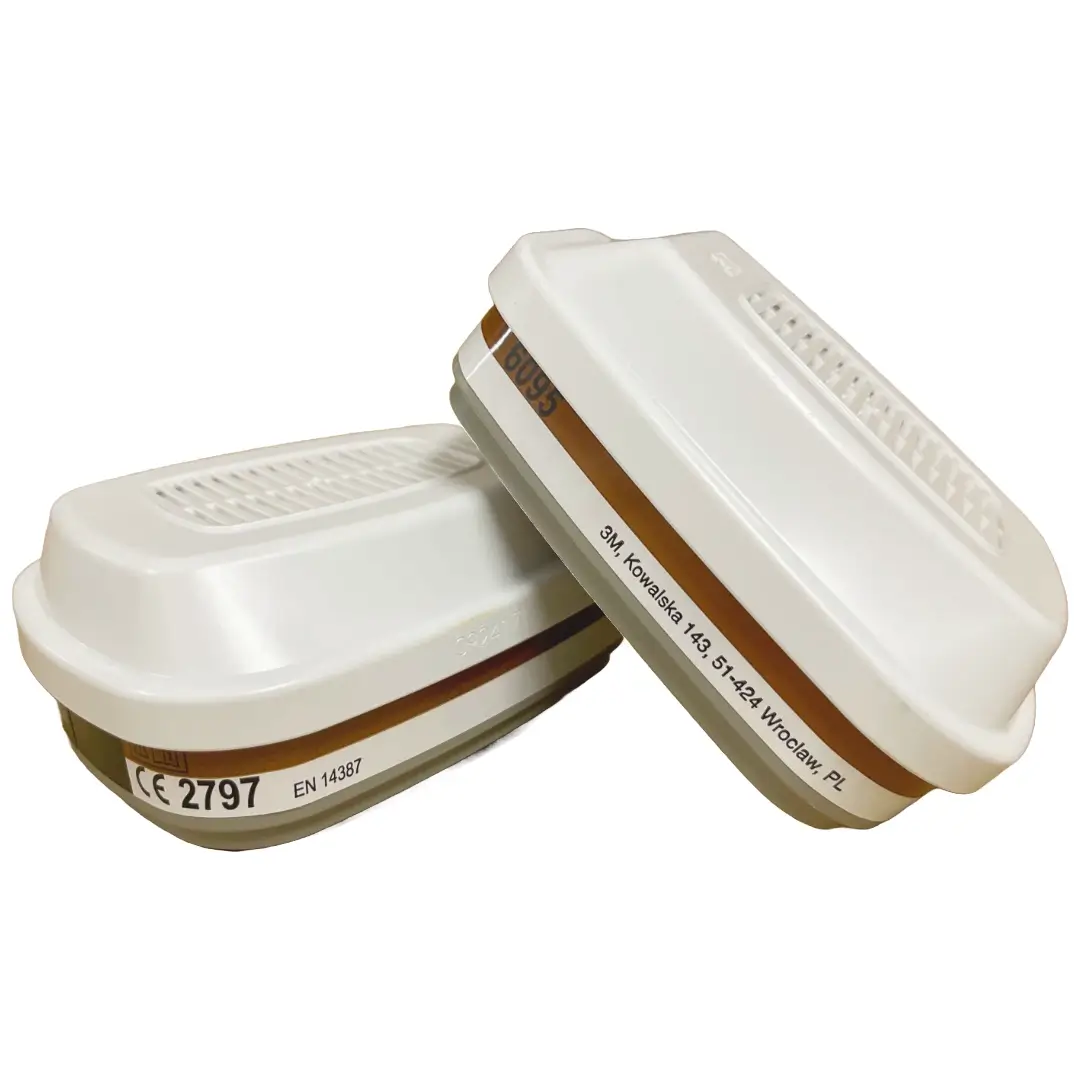
3M 6095 A2P3 R Gas, Vapour & Particulate Filters (1 Pair)
A practical choice when you need combined protection against organic vapours (A2) and fine particulates (P3) for tasks like spray painting, solvent use, and dusty prep work, provided your respirator is compatible.

3M DT-4031E CF22 A2P3 R D Combination Filter
A versatile A2P3 combination filter often selected where users want one solution for mixed environments with both vapours and particulates, subject to correct RPE selection and compatibility.
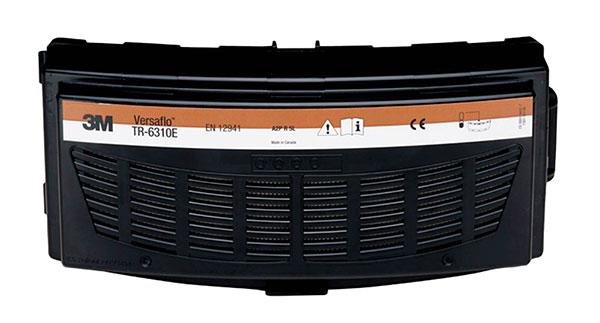
3M™ Versaflo™ TR-6310E A2P Filter
For users on the 3M Versaflo PAPR system, this A2P filter supports tasks involving organic vapours plus particulates, a common requirement in paint and prep environments where powered comfort is beneficial.
9) Quick decision rule: can I use the same filter for different jobs?
Use this short rule-of-thumb:
- Identify the hazard for each job (dust, fume, mist, vapour, gas).
- Match the filter type (P for particulates, A/B/E/K for vapours and gases).
- Choose the right class (P3 vs P2, A2 vs A1, etc) based on severity and duration.
- Confirm compatibility with your respirator system.
- Manage service life: store sealed, replace when clogged (particulate) or per change schedule (gas/vapour).
If any step is unclear, it is usually safer to treat the jobs as requiring separate filter sets.


