

Choosing the right respirator filter starts with a simple question: are you trying to stop solid particles (dust, fumes, mist), or invisible gases and solvent vapours, or both? P3 particulate filters and gas/vapour filters work in completely different ways, and selecting the wrong type can leave you unprotected.
📋 Key Takeaways
- P3 particulate filters protect against solid and liquid aerosols (dust, smoke, fumes, mists), not gases.
- Gas and vapour filters protect against specific chemicals (for example organic vapours), not dusts, unless combined with a particulate stage.
- Filter markings matter: P3 is particulate performance, A/B/E/K indicate gas classes, and combination filters (for example A2P3) cover both.
- Change-out is different: particle filters clog, gas/vapour filters can become “used up” without warning, smell is not a reliable indicator.
1) The two hazard types you are filtering
Before looking at filter labels, it helps to categorise what’s in the air:
Particulates (aerosols)
These are tiny solid particles or liquid droplets suspended in the air, such as:
- Wood dust, flour dust, cement dust
- Metal fume (welding, grinding)
- Smoke particles
- Spray mist (paint mist), oil mist
- Powder handling and sanding debris
Gases and vapours
These are molecules, not particles. Examples include:
- Solvent vapours (paint thinners, adhesives, degreasers)
- Acid gases (some cleaning chemicals, industrial processes)
- Ammonia (common in some cleaning and refrigeration contexts)
A key point: A strong smell does not tell you whether you have particles or vapours, and some dangerous gases have poor warning properties.
2) What is a P3 particulate filter?
A P3 filter is a high-efficiency particulate filter used on reusable respirators and powered systems. In European standards, particulate filters are commonly assessed under EN 143 (or as part of other relevant standards depending on the system).
What P3 filters protect you from
P3 filters are designed for very fine particulates, including:
- Hazardous dusts (for example hardwood dust)
- Metal fumes (for example from welding)
- Fine mists (for example paint mist)
- Smoke particles
How a P3 filter works
Particulate filters work by trapping particles in a fibrous filter media via mechanisms like interception and diffusion. As they load up, breathing resistance can increase.
What P3 filters do not protect you from
- Organic vapours (solvents)
- Acid gases
- Ammonia
- Carbon monoxide (CO)
If your job creates both mist and solvent vapour (for example spray painting with solvent-based products), a P3 filter alone is not enough, even if it reduces the visible “fog” in the air.
3) What are gas and vapour filters?
Gas/vapour filters use adsorbent media, typically activated carbon, to capture specific gases and vapours. In Europe these are commonly classified under EN 14387.
Gas filter “letter codes” (what they mean)
The letter tells you the type of gas/vapour the filter is designed for:
- A: Organic vapours (many solvents)
- B: Inorganic gases/vapours (excluding CO)
- E: Acid gases/vapours (for example sulphur dioxide)
- K: Ammonia and organic ammonia derivatives
- You may also see specialist markings like Hg (mercury) or NO (nitrogen oxides) on some ranges.
Capacity classes (1, 2, 3)
Numbers indicate capacity (how much the filter can absorb under test conditions):
- 1: low capacity
- 2: medium capacity
- 3: high capacity
So A1 is organic vapour protection with a lower capacity than A2.
What gas/vapour filters do not protect you from
On their own, gas/vapour filters do not reliably stop:
- Dusts
- Fumes
- Mists
Unless the filter is a combination type that includes a particulate stage (for example A2P3).
4) The simplest way to compare them
Mask Comparison
| Feature | P3 Particulate Filter | Gas/Vapour Filter (for example A1, A2) |
|---|---|---|
| Stops dust/fume/mist | Yes | Not unless combined (P) |
| Stops solvent vapours | No | Yes, if correct class (A) |
| Stops acid gases | No | Yes, if correct class (E) |
| Stops ammonia | No | Yes, if correct class (K) |
| Typical “end of life” sign | Higher breathing resistance (clogging) | Breakthrough can occur without obvious warning |
| Common marking examples | P3, P3 R, P3 NR | A1, A2, ABEK1, AX |
5) Combination filters: when you need both
If your hazard includes both particulates and vapours, look for combination markings such as:
- A2P3 (organic vapours + high-efficiency particulate)
- ABEK1P3 (multi-gas + particulate)
Combination filters are common in:
- Spray painting (mist + solvent vapour)
- Resin and fibreglass work (dust + styrene or other vapours)
- Chemical clean-down where aerosols and vapours are present
- Welding in contaminated environments (fume plus nuisance odours or vapours, depending on task)
6) Choosing the right filter for your job (quick guide)
Step 1: Identify the contaminant
- Dust, sanding, smoke, welding fume, spray mist: start with P3
- Solvent smells, thinners, adhesives, fuel vapours: look at A-class
- Acid gases: look at E-class
- Ammonia: look at K-class
Step 2: Decide if you need eye/face protection too
- For splashes, high concentrations, or irritating vapours, a full face mask can be more appropriate than a half mask because it protects eyes as well as lungs.
Step 3: Check compatibility
Filters are not universal. They must match the mask system (bayonet, Secure Click, thread, PAPR-specific filter, etc).
7) Filter change-out and safety considerations
Air-purifying respirators and filters (P3 and gas/vapour) do not supply oxygen. They are not suitable for:
- Oxygen-deficient atmospheres
- Confined spaces without proper assessment
- Unknown atmospheres
- Situations involving high levels of carbon monoxide (CO) unless using appropriate specialist equipment and procedures
Gas/vapour filter change-out
Gas/vapour cartridges can become saturated. Depending on the chemical, you may not get reliable warning signs. The safest approach is a planned change schedule based on your use, contaminant, and workplace assessment.
Particulate filter change-out
Particulate filters are often changed when:
- Breathing becomes noticeably harder
- The filter is damaged, wet, or contaminated
- You reach the manufacturer’s stated service life (where applicable)
8) Recommended filter options from The Face Mask Store UK
Below are a few popular, reputable options that illustrate the difference between P3-only, gas/vapour-only, and combined filtration.

3M Secure Click D9035 P3 R Particulate Filters
A dedicated P3 particulate option for high-efficiency dust, fume, and mist protection when you do not need gas/vapour filtration.

3M 6051 A1 Gas and Vapour Filters (Pack of Two)
An A1 organic vapour filter pair for solvent-type vapours, ideal where the primary hazard is vapour rather than dust (use a particulate stage as well if aerosols are present).
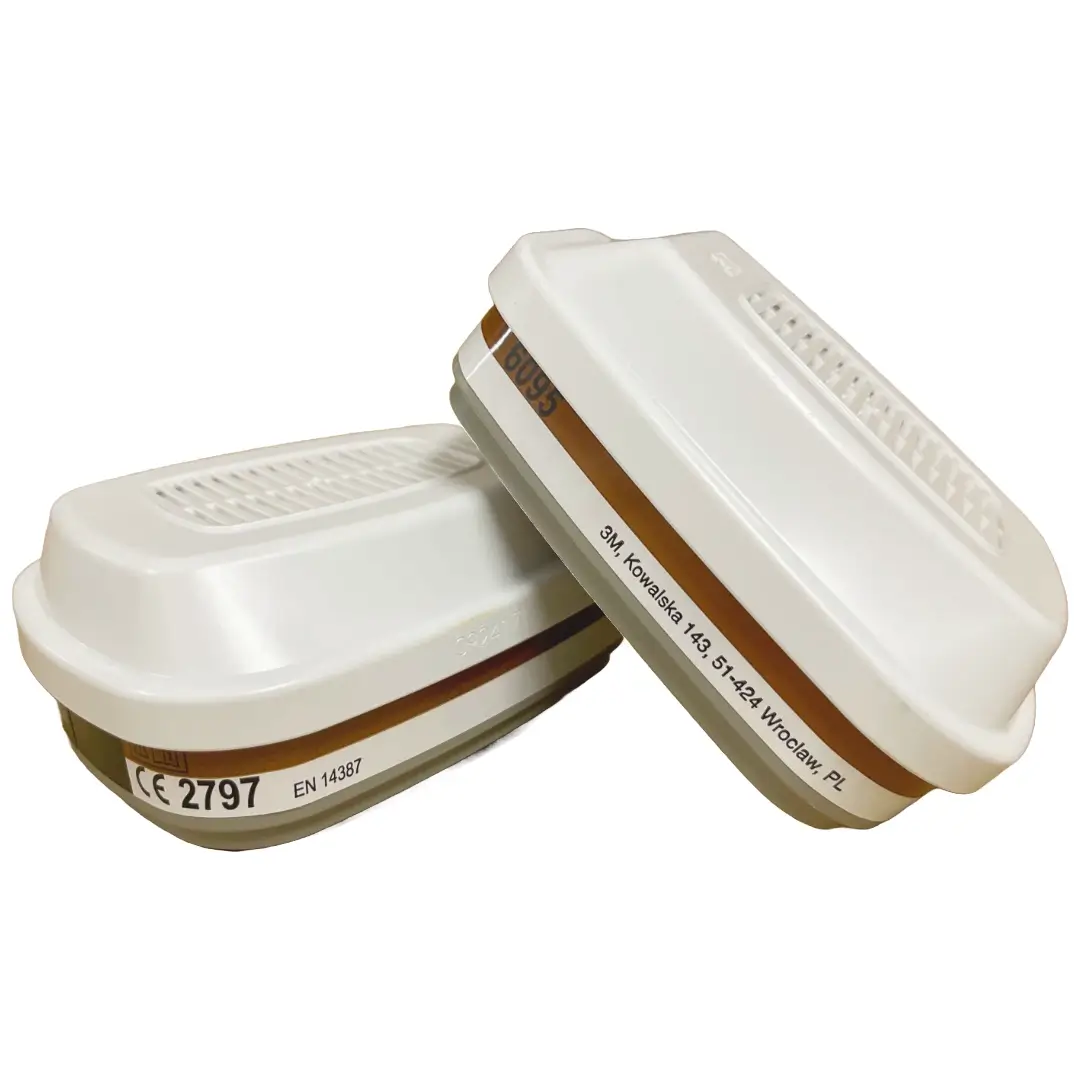
3M 6095 A2P3 R Gas, Vapour & Particulate Filters (1 Pair)
A combination A2P3 filter that covers many real-world tasks involving both organic vapours and particulates, for example certain paint, solvent, and sanding workflows (subject to suitability and assessment).
9) Common questions
“If I can smell it, do I need a vapour filter?”
Often yes. Smell usually indicates vapours, and a P3 particulate filter will not remove them. The correct gas class still matters (A, E, K, etc).
“If there’s visible dust in the air, do I only need P3?”
Not always. Some jobs produce both dust and vapours. For example, sanding filler (dust) near solvent-based products (vapour) may call for a combination filter.
“Is P3 the same as FFP3?”
They are related but not the same:
- FFP3 is a disposable filtering facepiece class (the mask is the filter).
- P3 is a filter class used on reusable respirators and powered systems.


