

📋 Key Takeaways
- FFP3 masks are designed to filter airborne particles very effectively, including common pollution particle sizes such as PM10 and PM2.5, but only if they fit well.
- The “FFP3 = 99%” figure is a lab performance rating, real-world protection depends heavily on face seal, movement, facial hair, and correct donning.
- Air pollution is not just particles, it also includes gases (for example NO₂, ozone, VOCs) that standard FFP3 particulate masks do not filter.
- For many people, the biggest upgrade from “no mask” is a well-fitting FFP2 or FFP3, but those needing gas protection should consider combination filters (gas + P3 particulate).
What “air pollution” are we trying to protect against?
Air pollution is a mixture. The two broad categories matter because different filters work on different hazards:
Particulate pollution (what FFP3 is best at)
These are solid or liquid particles suspended in air, including:
- PM10 (particles up to 10 microns), road dust, pollen fragments, brake dust
- PM2.5 (particles up to 2.5 microns), combustion particles from traffic, wood burning
- Ultrafine particles (smaller than PM2.5), often from combustion and traffic
These particles can irritate airways and, depending on size and chemistry, penetrate deep into the lungs.
Gaseous pollution (what standard FFP3 does not filter)
These are molecules, not particles, such as:
- Nitrogen dioxide (NO₂) from traffic
- Ozone (O₃) (often higher in hot weather)
- Volatile organic compounds (VOCs) from fuels, solvents, some industrial sources
To reduce gases you typically need activated carbon or dedicated gas/vapour filters, not just a particulate respirator.
What does an FFP3 rating actually mean?
In the UK and EU, FFP masks are certified to EN 149. The two figures people most commonly quote are:
- Filter penetration (how well the filter media captures the test aerosol)
- Total inward leakage (how much can leak in around the seal during testing)
Mask Comparison
| Feature | FFP2 | FFP3 |
|---|---|---|
| Minimum filtration performance (EN 149 test) | 94% | 99% |
| Maximum total inward leakage (EN 149 limit) | 8% | 2% |
| Typical use case | General dust, commuting, moderate pollution days | Higher particle exposure, higher-risk users, heavier pollution or dusty work |
EN 149 tests use challenge aerosols and set pass limits, but your face seal is often the limiting factor outdoors, not the filter material itself. A top-rated FFP3 worn with gaps can underperform a lower-rated mask that seals properly.
So, how much protection will an FFP3 give against PM2.5 and PM10?
In simple terms
- Against particle pollution (PM2.5/PM10), a genuine, well-fitting FFP3 can provide very high reduction in what you inhale.
- The filter media in certified FFP3 respirators is highly efficient for the particle sizes that dominate urban pollution and smoke.
The real-world limiter: leakage
Air takes the path of least resistance. If there is a gap at the nose, cheeks, or chin:
- unfiltered air is pulled in during inhalation
- the effective protection drops quickly, especially when walking fast, cycling, or talking
If you want FFP3-level protection from air pollution, fit is the priority:
- choose headbands where possible, they usually seal better than ear loops
- mould the nose clip firmly and re-check after a few minutes
- avoid masks that collapse onto the face during a strong inhale, this can disturb the seal
What FFP3 masks do not protect you from (and common misunderstandings)
FFP3 particulate respirators do not reliably protect against gaseous pollutants (NO₂, ozone, many VOCs) and they do not supply oxygen. They should not be used in oxygen-deficient environments or unknown atmospheres.
“But my mask has a carbon layer, does that solve gases?”
Some FFP3 masks include activated carbon layers. These can help with nuisance odours and may reduce some vapours at low levels, but:
- carbon capacity is limited
- performance varies by gas type and concentration
- humidity and time in use can reduce effectiveness
If your main concern is the “chemical” side of urban pollution, you may be better served by a reusable respirator with combination filters (gas/vapour + P3 particulate).
FFP3 for commuting, walking, and cycling: what to consider
Benefits
- High particle filtration, particularly useful on high-PM days and near traffic
- Can reduce exposure to soot and combustion particles
- Particularly valuable for people who are sensitive to particulate pollution, or who want the highest particulate reduction available in a disposable format
Valved vs unvalved
- A valved FFP3 can feel cooler and reduce moisture build-up, which may help maintain comfort and, indirectly, fit.
- An unvalved FFP3 filters both inhaled and exhaled air through the mask material, often preferred where source control is important.
For air pollution protection to the wearer, both can work well if they seal properly.
When should you consider something other than an FFP3 disposable?
An FFP3 disposable is excellent for particulates, but consider alternatives if:
- you want gas/vapour reduction as well as particles
- you need a more consistent seal day-to-day
- you want a longer-term, cost-effective option
Reusable half masks with P3 particulate (and optional gas filters) can provide a more stable fit for some users.
Recommended options from The Face Mask Store UK

3M Aura 9330+ FFP3 Unvalved Respirator Face Mask
A trusted FFP3 disposable option for high particulate filtration, ideal for reducing exposure to PM2.5 and PM10 when you need a compact, easy-to-carry respirator.
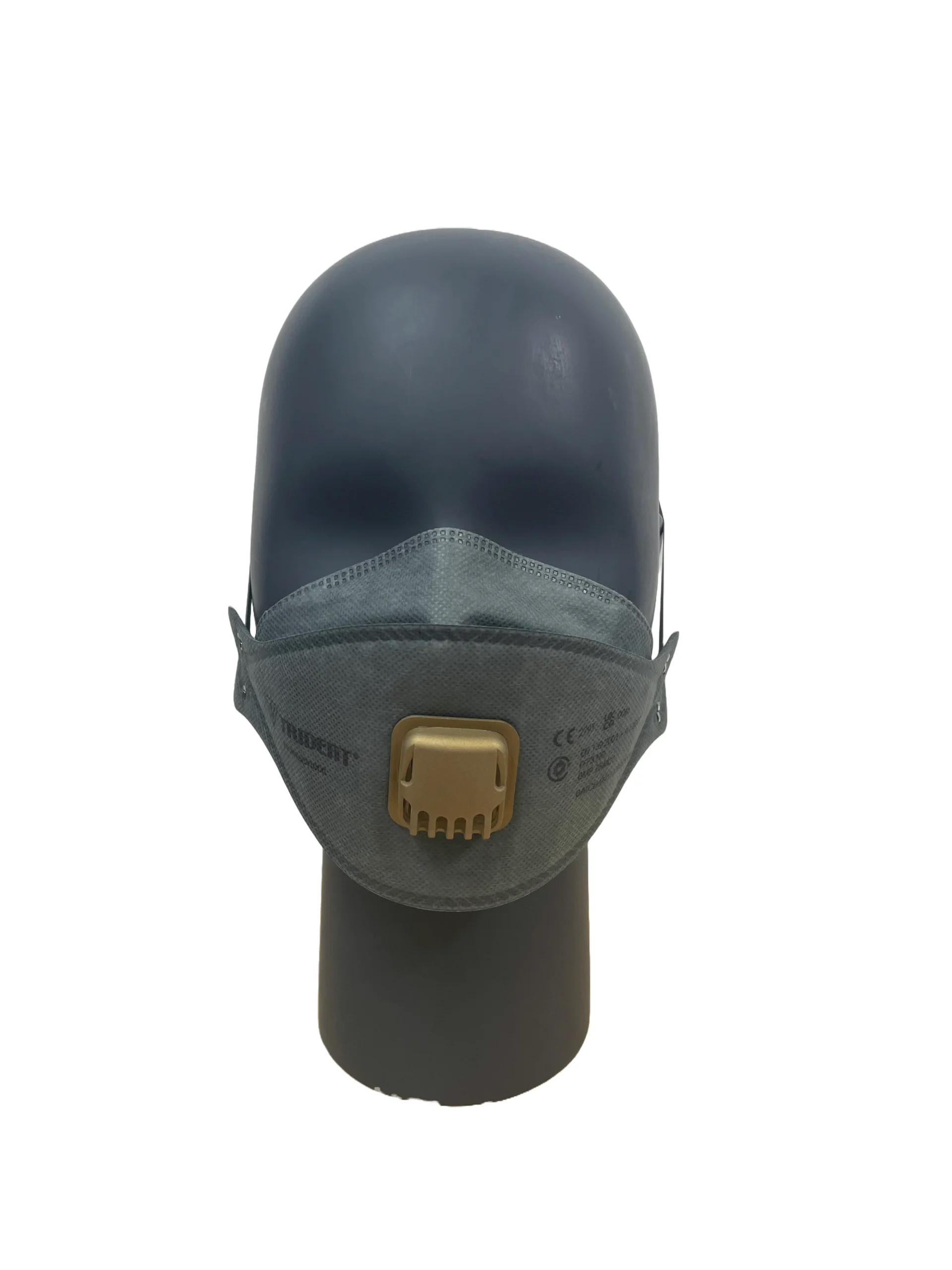
Trident FFP3 Carbon Valved Mask
An FFP3 mask with an activated carbon layer and valve, a good choice if you want strong particulate protection with improved comfort, plus some nuisance odour reduction for city use.

3M 4279+ Half Mask ABEKP3
A reusable half mask with gas/vapour + P3 particulate protection, worth considering if air pollution concerns include both particles and chemical pollutants (for example traffic-related fumes and odours) and you want a more durable solution than disposables.
Practical tips to get FFP3-level performance against pollution
A quick “seal check” helps: cover the mask surface with your hands and inhale gently. If you feel air rushing in near the eyes or nose bridge, re-mould and re-seat the mask.
- Shave the seal area if possible, stubble and beards prevent a proper seal on tight-fitting respirators
- Match mask shape to your face, some people seal better with tri-fold styles, others with moulded cups
- Replace when breathing resistance increases or the mask becomes damp, dirty, or misshapen
Bottom line: how much protection is it, really?
- If your goal is to reduce particle pollution exposure, an FFP3 respirator can offer excellent protection, often the highest available in a disposable filtering facepiece category.
- If your goal includes reducing exposure to gases and vapours associated with pollution, you should look beyond standard FFP3 particulate masks to combination-filter respirators.


