

Respirator filters do not have one universal lifespan. How long they last depends on what type of filter you’re using, what you’re exposed to (dusts vs fumes vs solvent vapours), and how heavily the filter is loaded. The good news is that there are clear, practical ways to tell when a filter is nearing the end of its service life, and a few simple habits that help you replace at the right time, not too early and not too late.
📋 Key Takeaways
- Particulate filters (P1/P2/P3) usually get harder to breathe through as they clog, this is often the main “change” signal.
- Gas and vapour filters (A, B, E, K, etc) can become exhausted without obvious warning, so planned change schedules are vital.
- Disposable filtering facepiece respirators marked NR are single shift use in workplace terms, even if they look fine.
- Storage matters, poorly stored filters can degrade faster, especially activated carbon cartridges exposed to air.
- When in doubt, follow the manufacturer instructions and your COSHH risk assessment, not guesswork.
1) What “filter life” actually means
A respirator filter’s “life” can refer to two different things:
Shelf life (unused life)
How long the filter can be stored before use. This is typically shown by a use by date on the packaging.Service life (in-use life)
How long the filter performs properly once opened and used. This depends heavily on exposure conditions and your work rate.
A common mistake is assuming a filter is fine because it is “within date”. A filter can be within shelf life and still be fully spent if it has absorbed vapours during use, or even during storage after being opened.
2) The main filter types, and how they “fail”
Particulate filters (P1, P2, P3)
Particulate filters capture airborne particles such as:
- dusts (wood, plaster, concrete, flour)
- metal fumes (often when used in appropriate systems)
- mists and aerosols (depending on the filter type and system)
Typical end-of-life behaviour: they gradually clog, which increases breathing resistance. On powered systems, the unit may have an alarm or reduced airflow as the filter loads.
Gas and vapour filters (A, B, E, K and combination filters)
Gas and vapour cartridges contain sorbent material, usually activated carbon, to adsorb gases and vapours such as:
- A: organic vapours (many solvents, paints, adhesives)
- B: inorganic gases (varies by substance)
- E: acid gases
- K: ammonia and derivatives
Typical end-of-life behaviour: “breakthrough”, meaning the contaminant starts passing through the filter. This can happen without a strong smell, depending on the substance and your ability to detect it.
Combination filters (for example A2P3)
These include both:
- a gas/vapour element, and
- a particulate element
In practice, you must replace the filter when either part reaches end of life.
3) How long do particulate filters last?
There is no fixed number of hours that applies to all workplaces, but particulate filter life is mainly driven by:
- dust concentration
- particle size and type (fine dust loads filters faster)
- humidity and moisture
- your breathing rate (heavy work draws more air through the filter)
- presence of oil mists (some filters are rated for this, some are not)
Common real-world expectations
- Light, intermittent DIY sanding: often multiple sessions, if kept clean and dry.
- Regular trade use in dusty environments: commonly days or weeks, but it can be much shorter in very high dust.
- Very fine dusts (plaster, MDF, concrete): can clog filters quickly, sometimes in a single shift.
Signs a particulate filter needs replacing
- noticeable increase in breathing resistance
- filters look loaded with dust or visibly dirty (visual checks help but do not guarantee performance)
- for PAPR units, low airflow warnings, reduced airflow, or the blower working harder than usual
4) How long do gas and vapour filters last?
Gas and vapour filters are more complicated because they can be exhausted by:
- high contaminant concentration
- duration of exposure
- humidity (water vapour can reduce adsorption capacity)
- temperature
- airflow rate (heavy breathing increases consumption)
- the specific chemical’s boiling point and adsorption characteristics
- how the filter is stored between uses
Do not rely on smell as your only warning. Some substances have poor warning properties, can desensitise your sense of smell, or are hazardous at levels below what you can detect. If you work with solvents, chemicals, or unknown mixtures, you should use a planned change schedule based on your risk assessment and the filter manufacturer’s guidance.
Practical replacement approach for gas and vapour filters
In workplaces, best practice is to set a change-out schedule, for example:
- replace after a defined number of hours of exposure, or
- replace at the end of each shift/day for certain tasks, or
- replace weekly for low-level intermittent exposures, only if justified by risk assessment
If you are working under COSHH, your employer should assess exposure and set controls, including maintenance and replacement intervals.
5) What about disposable “FFP” respirators, do their filters expire in use?
Disposable filtering facepiece respirators (EN 149), such as FFP2 and FFP3, contain built-in filter media.
Key markings you may see:
- NR: non-reusable (workplace meaning is typically single shift)
- R: reusable (designed to be reused, if kept serviceable)
- D: passed dolomite clogging test (better performance in dusty environments)
General guidance
- If the respirator is marked NR, treat it as single shift in occupational settings.
- Even “reusable” disposable masks should be replaced if they become:
- hard to breathe through
- damaged, deformed, or poorly sealing
- wet, heavily soiled, or contaminated
6) PAPR filters, what changes the lifespan?
Powered Air-Purifying Respirators (PAPR) pull air through filters using a blower. Many users assume “powered” means “longer filter life”. Sometimes it does, but the real driver is still how much contaminant is in the air.
Typical PAPR setups include:
- main particulate or combination filter
- pre-filters (these can dramatically extend main filter life in dusty tasks)
Signs a PAPR filter needs replacing
- airflow alarm activates (where fitted)
- airflow feels weaker than normal
- reduced runtime, because the blower works harder against a clogged filter
- filter is visibly loaded, or pre-filter is dirty (often the first thing to change)
If your PAPR system uses a pre-filter, replacing the pre-filter on time is often the most cost-effective way to maintain airflow and extend the life of the main filter.
7) Simple “replace or keep” checks you can do
Benefits
- Better protection, because filters are changed before failure
- More comfort, because clogged particulate filters increase breathing resistance
- Lower costs, because you avoid replacing too early or discarding usable filters
- Improved compliance, because change schedules can be documented where needed
Here’s a practical checklist:
Particulate filter check
- Is breathing resistance noticeably higher than normal?
- Is the filter visibly loaded with dust?
- Has the PAPR airflow alarm activated (if applicable)?
Gas/vapour filter check
- Are you following a set change schedule?
- Is there any sign of contaminant breakthrough (odour, taste, irritation)?
- Has the filter been left unsealed between uses (which can shorten life)?
General checks for any filter
- Any physical damage, cracks, missing seals, or incorrect fitment?
- Any signs of moisture ingress or contamination?
- Has the filter passed its shelf life date?
8) Quick comparison, particulate vs gas/vapour end-of-life cues
Mask Comparison
| Filter type | What it protects against | Typical “end of life” indicator | Best practice replacement method |
|---|---|---|---|
| Particulate (P1/P2/P3) | Dusts, mists, aerosols | Higher breathing resistance, PAPR low airflow | Replace when breathing resistance rises, or per maintenance schedule |
| Gas/Vapour (A, B, E, K) | Solvents and gases (depends on type) | Breakthrough can be subtle or sudden | Planned change schedule based on COSHH and manufacturer guidance |
| Combination (e.g. A2P3) | Particulates + gases/vapours | Either clogging or breakthrough | Replace when either element reaches end of life |
9) How to make your filters last longer (without compromising safety)
- Use the right filter for the hazard, don’t “upgrade” randomly. For example, a higher particulate rating does not automatically solve vapour exposure.
- Add pre-filters where compatible, especially for heavy dust.
- Store filters correctly, ideally sealed in an airtight bag or container, away from solvents, heat, and sunlight.
- Keep facepieces clean and sealing well, leakage wastes filter capacity and reduces protection.
- Avoid leaving gas/vapour cartridges open to air between uses, they can continue adsorbing contaminants even while you are not wearing them.
Product recommendations (popular replacement options)
Below are a few commonly chosen filter options from our catalogue, suitable for users who need reliable replacement filters for reusable respirators or powered systems. Always check compatibility with your facepiece or PAPR unit.

3M 2135 P3 R Particulate Filters (Pack of Two)
A dependable P3 particulate filter option for users who need high-level protection against dusts and airborne particulates in compatible 3M reusable respirators.
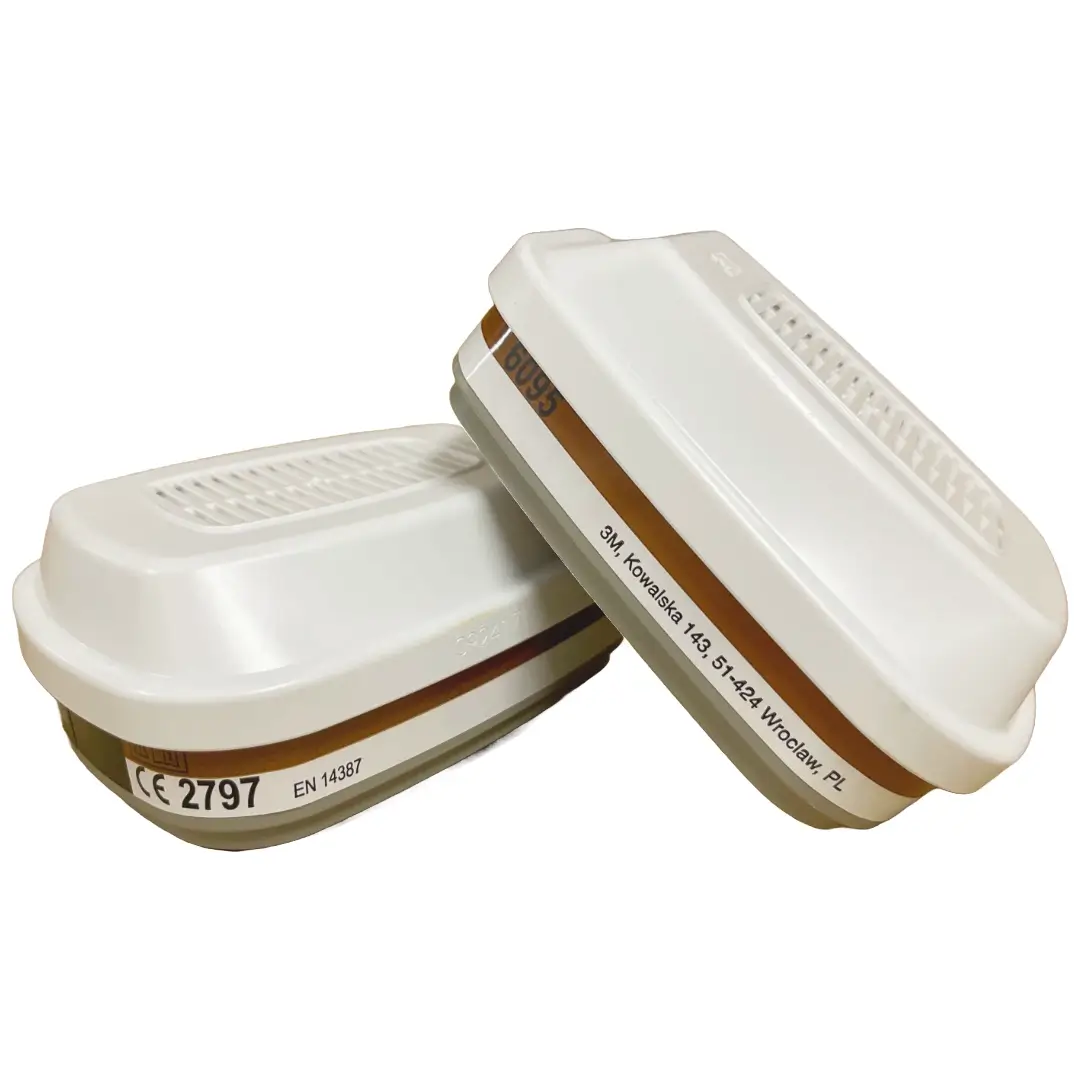
3M 6095 A2P3 R Gas, Vapour & Particulate Filters (1 Pair)
A practical combination filter for users who need protection from organic vapours (A2) and high-efficiency particulates (P3) in compatible 3M respirators, ideal for many paint, solvent, and particulate mixed-exposure tasks.

3M Adflo High Efficiency Starter Kit 15-1101-99/37147
A useful replacement bundle for 3M Adflo PAPR users, designed to help maintain correct airflow and filtration performance when your existing filter components are due for change.
10) When you should get professional help
If you are unsure about exposure types, especially in workplaces where solvents, welding fume, silica dust, isocyanates, or mixed chemicals may be present, you should not guess. The right filter choice and change-out interval should come from:
- COSHH assessment
- manufacturer guidance
- in some settings, face fit testing and documented maintenance routines


