

People sometimes ask about “Cut Level E” vs “Cut Level F” for face masks, especially when buying PPE for fabrication, construction, glazing, waste handling, or maintenance work. The important point is this:
Cut levels (E and F) do not apply to face masks. They are cut-resistance ratings for gloves and other hand/arm protection, most commonly under EN 388.
So, if you have seen “Cut Level E/F” mentioned alongside masks, it is usually because the supplier is discussing a full PPE set (respiratory protection plus cut-resistant gloves), or the product page is mislabelled.
📋 Key Takeaways
- Cut Level E and F are glove ratings (EN 388), not face mask ratings.
- Level F is higher cut resistance than Level E, measured using the ISO 13997 cut test.
- For respiratory protection, look for EN 149 (FFP2/FFP3) or EN 14683 (Type IIR) depending on the job.
- If your work involves sharp edges and dust/fumes, you often need both: an FFP respirator and Cut Level E/F gloves.
What does “Cut Level” mean, and why it’s not a mask rating?
“Cut Level” is almost always shorthand for the EN 388 cut resistance grade used for protective gloves (and sometimes sleeves). It tells you how resistant the material is to being cut by sharp objects such as:
- Sheet metal edges
- Glass and glazing materials
- Sharp plastic strapping
- Blades and sharp components in recycling and waste streams
Face masks are tested to completely different standards that focus on filtration, inward leakage, breathing resistance, and sometimes fluid splash.
If a website or procurement list says “Cut Level F mask”, it usually means:
- they want a respirator mask for the airborne hazard, and
- they also want Cut Level F gloves for the sharp-handling hazard.
Cut Level E vs Cut Level F: the real difference (EN 388 / ISO 13997)
Modern EN 388 glove marking includes a cut test called ISO 13997, reported as a letter from A to F.
Cut Level Comparison (EN 388 ISO 13997)
| Cut Level | ISO 13997 Result | What it means in practice |
|---|---|---|
| E | 22 to 29.9 N | High cut resistance for many sharp-handling tasks |
| F | 30 N and above | Maximum cut resistance level in EN 388, for very high cut risk |
In simple terms:
If you are choosing between E and F, F offers more cut resistance, but gloves at higher cut levels can sometimes feel thicker or less dexterous, depending on the liner and coating.
When should you choose Cut Level E vs Cut Level F?
Choose Cut Level E when
- You need high cut protection but still want good dexterity
- Your cut hazard is present but controlled, for example routine handling with training and safe technique
- You are doing general sharp-handling tasks where E-rated gloves are commonly specified
Choose Cut Level F when
- You are handling very sharp materials frequently (thin sheet metal, razor-sharp edges, broken glass)
- There is a higher likelihood of sudden contact with sharp edges
- The risk assessment specifically calls for maximum cut resistance
Cut resistance reduces the chance and severity of cuts, but it does not make gloves “cut proof”. Safe systems of work, correct sizing, and replacing damaged gloves still matter.
So what rating should you look for on a face mask instead?
If your core need is respiratory protection, here are the standards that actually apply:
- EN 149 respirators (FFP2 / FFP3): for protection against airborne particulates such as dusts, mists, fibres, and some fumes (application dependent).
- EN 14683 medical masks (Type IIR, etc.): primarily for splash and droplet control, not the same as a tight-fitting respirator.
If you are working with sharp materials, it is very common to need:
- FFP2 or FFP3 for the airborne hazard, plus
- Cut Level E or F gloves for hand protection.
Practical examples: matching glove cut level to the job, plus a suitable mask
Handling sheet metal, grinding, sanding, demolition dust
- Gloves: Cut Level E or F depending on edge severity and frequency
- Mask: typically FFP3 for higher dust loads (based on your risk assessment)
Handling glass, glazing units, sharp waste, recycling
- Gloves: often Cut Level F is preferred for frequent sharp contact
- Mask: choose by airborne hazard present, sometimes FFP2 is sufficient, sometimes FFP3
Recommended products from The Face Mask Store UK
Here are a few relevant options if you are putting together a safer PPE combination (respiratory plus cut protection).
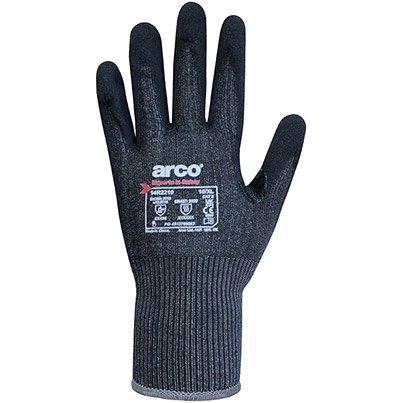
Arco Responsible 15g Cut E Sandy Foam Nitrile Gloves
A strong all-round Cut Level E glove option for sharp handling where you still need grip and practical dexterity.

TraffiGlove TG6240 Cut Level E Heat-Resistant Gloves
Ideal when your task combines sharp hazards with contact heat considerations, a common combination in metalwork and maintenance.

3M Aura 9330+ FFP3 Unvalved Respirator Face Mask
A high-performance FFP3 disposable respirator for particulate hazards, a common choice for dust-heavy tasks that often occur alongside sharp-material handling.
Quick checklist: avoid mix-ups when reading PPE specs
✅ If you see E or F, think gloves (cut resistance)
✅ If you see FFP2 or FFP3, think respirators (filtration and fit)
✅ If you see Type IIR, think medical mask (splash resistance, looser fit)
✅ If you need both sharp protection and dust/fume protection, plan for two compliant items, not one product trying to do everything


